





scopri di più
info tecniche
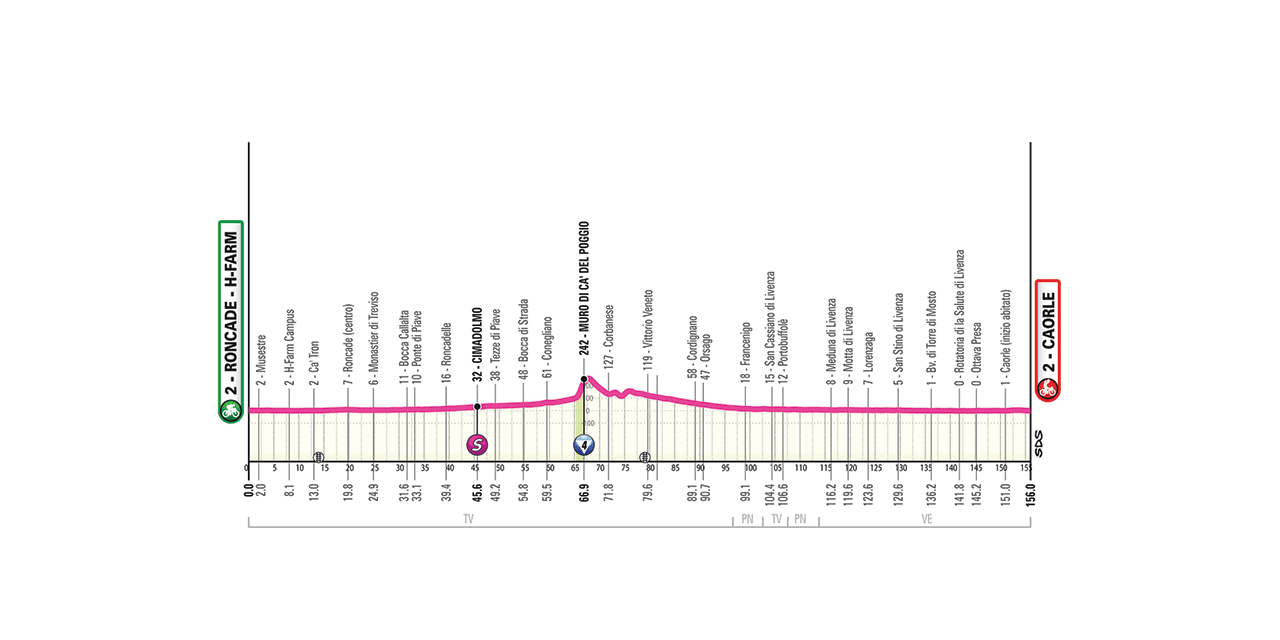
altimetria
planimetria
info tecniche
Route
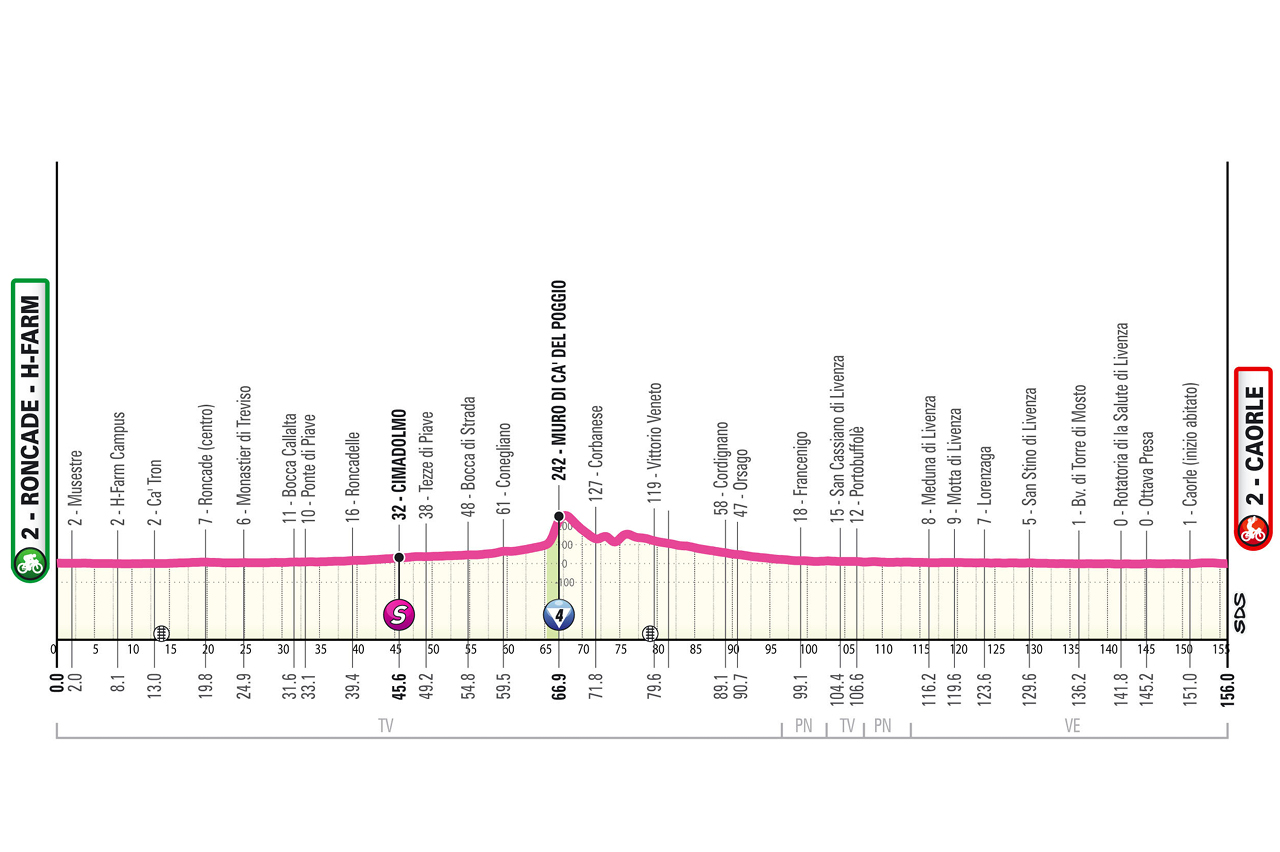
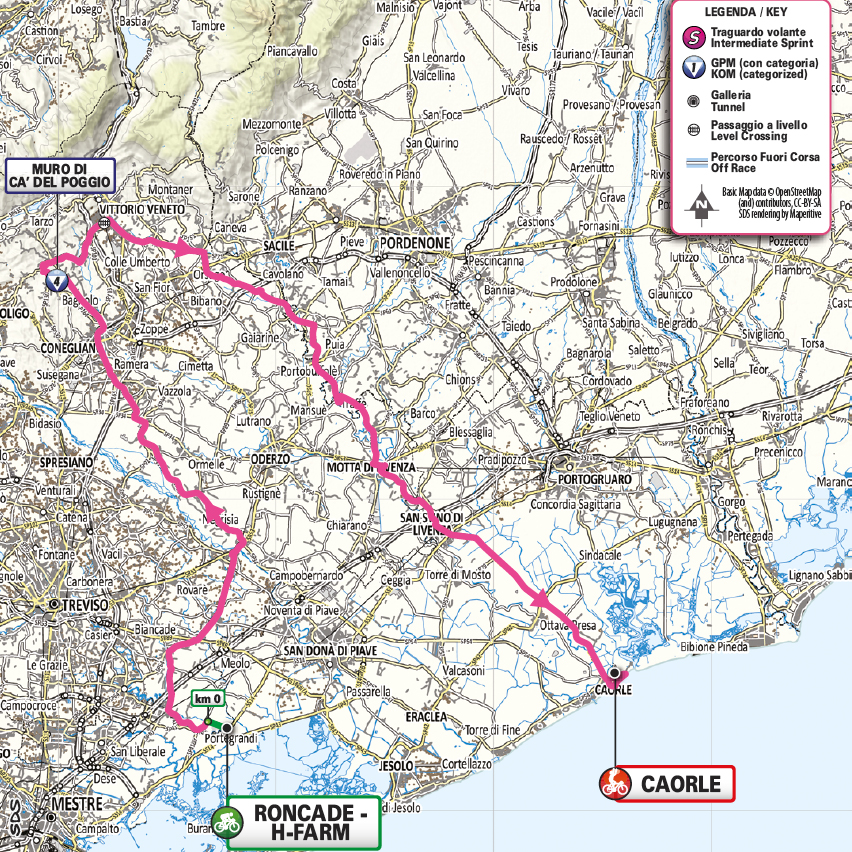
An almost completely flat stage, with the only climb being Ca’ del Poggio, roughly halfway through the route. The course gradually rises from Roncade to Vittorio Veneto on an almost imperceptible uphill drag, featuring the passage over the Muro di Ca’ del Poggio, before descending towards the finish on generally wide and straight roads.
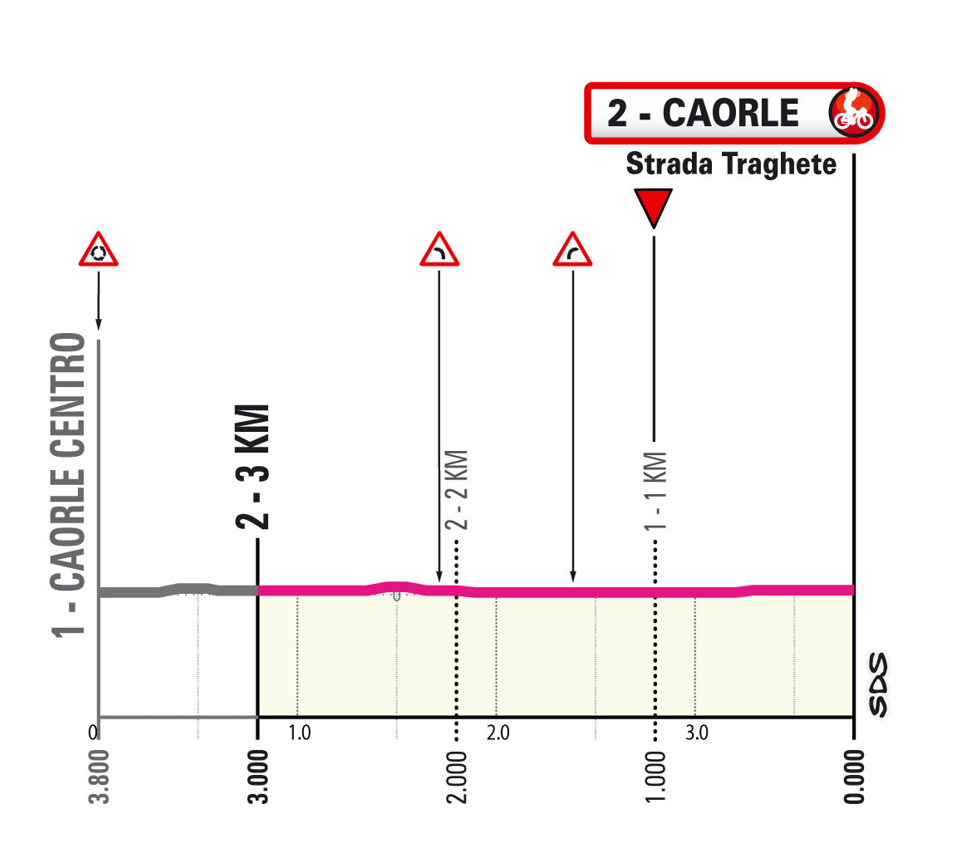
Final kilometers
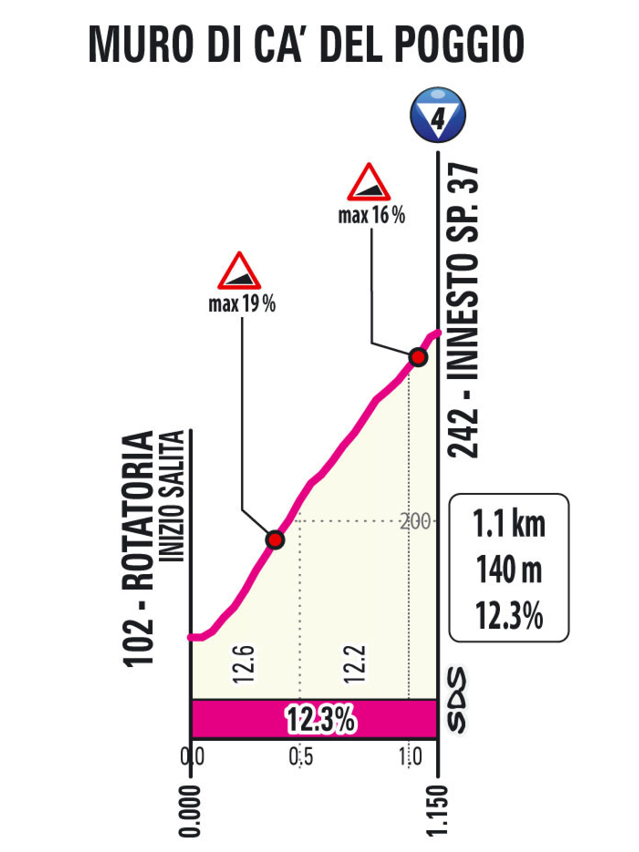
Urban finale featuring four corners linking as many straight sections. Roads are generally wide with a good surface. Final straight: 600 m on 8 m-wide asphalt.
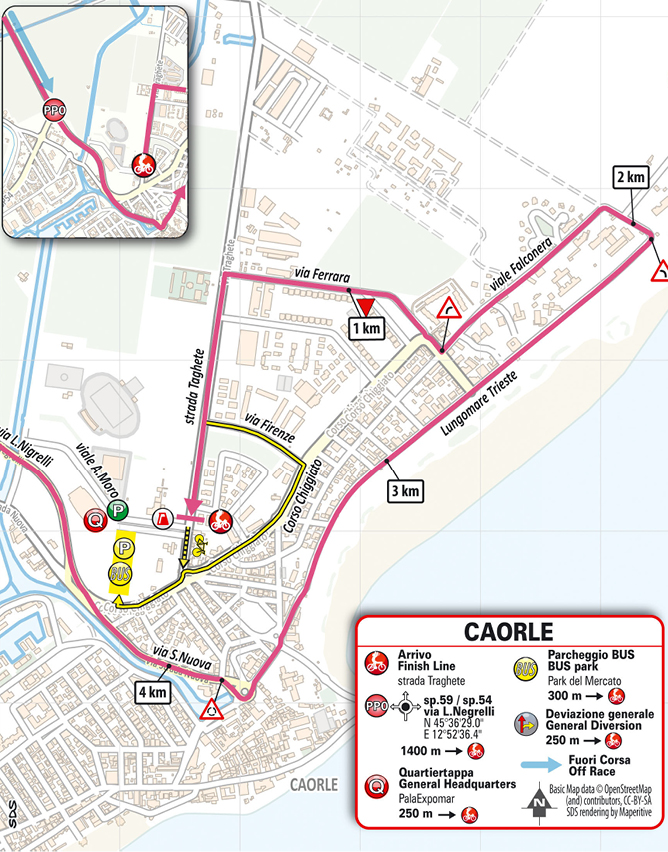
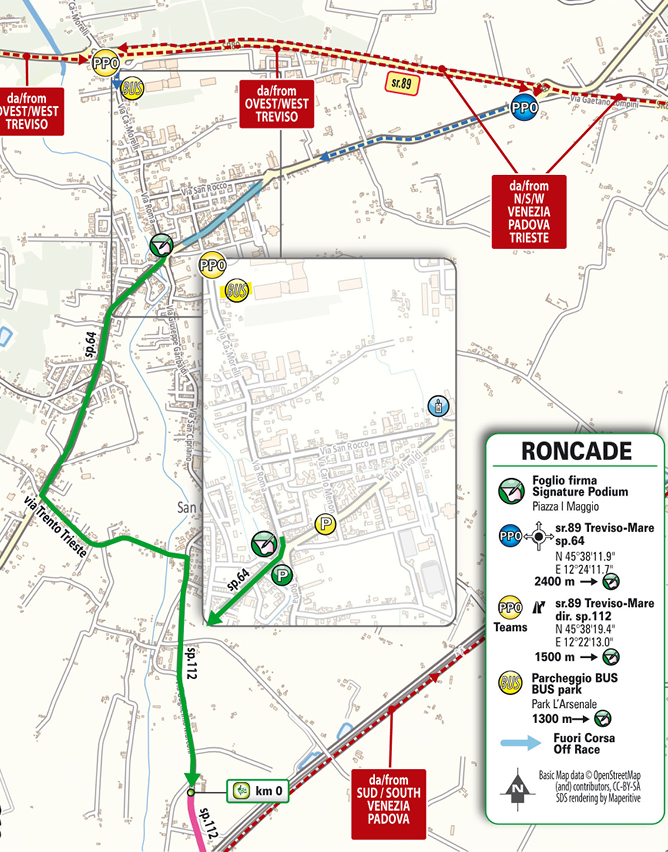
partenza / arrivo
dettaglio salite
ultimi km
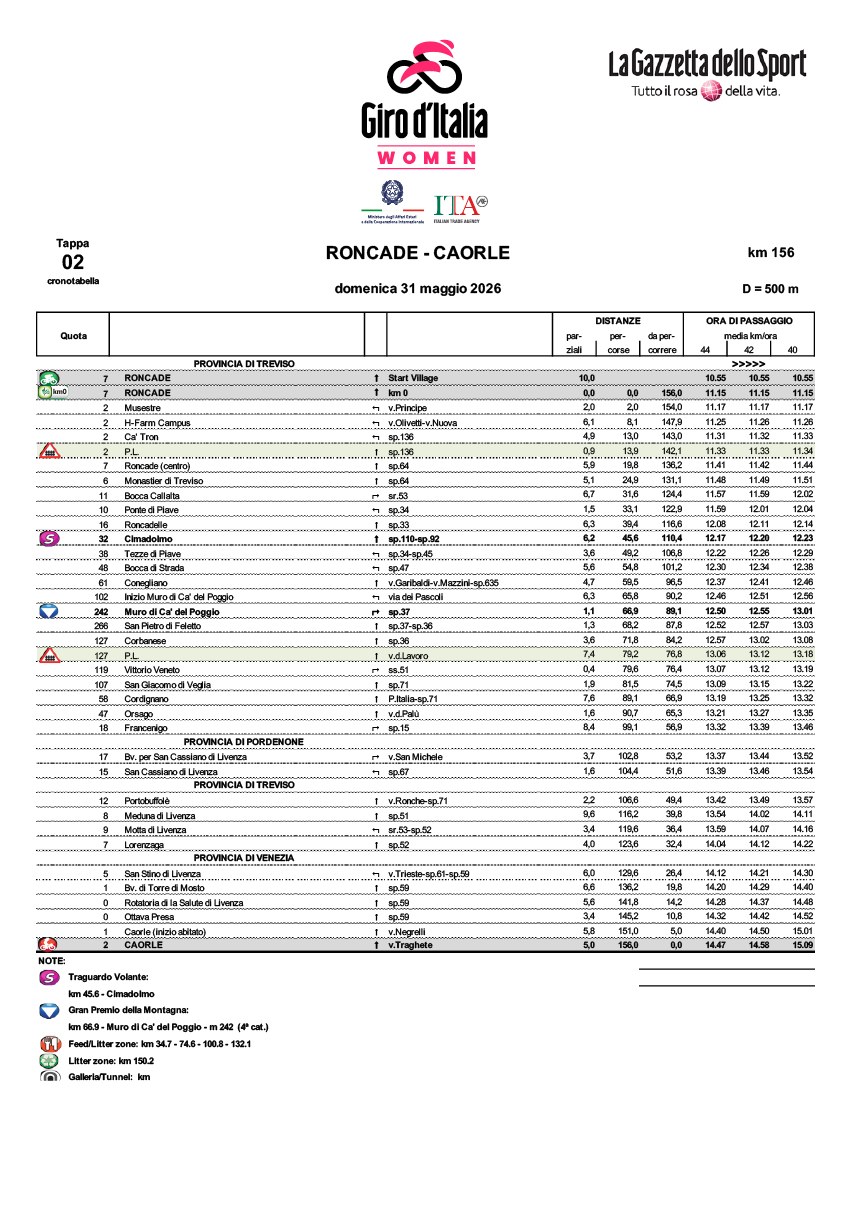
crono tabella
info turistiche
Città di:
Roncade
Overview
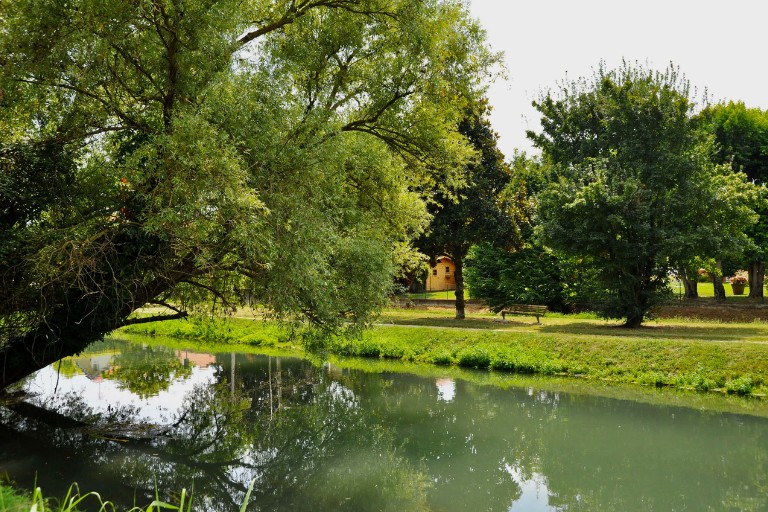
Roncade is a municipality in the Veneto plain, situated between Treviso and Venice, in a strategic and well-connected location.
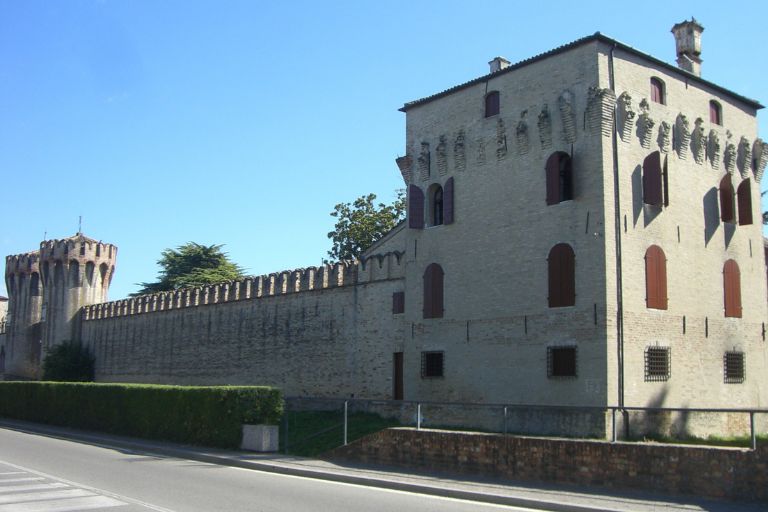
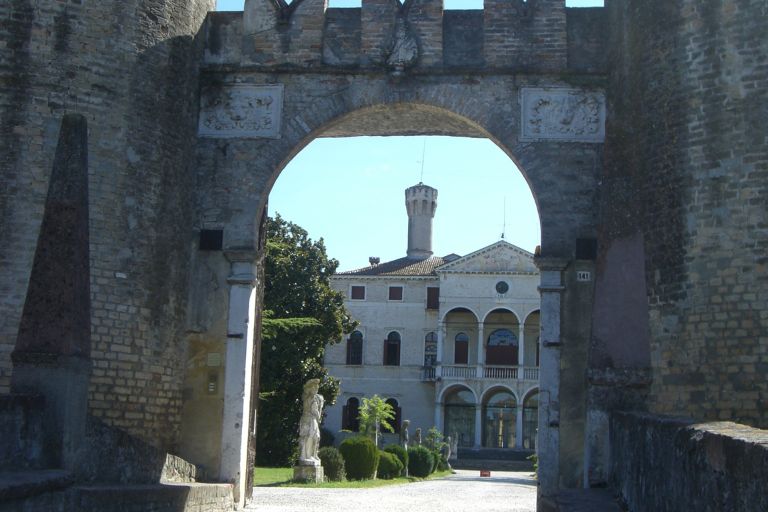
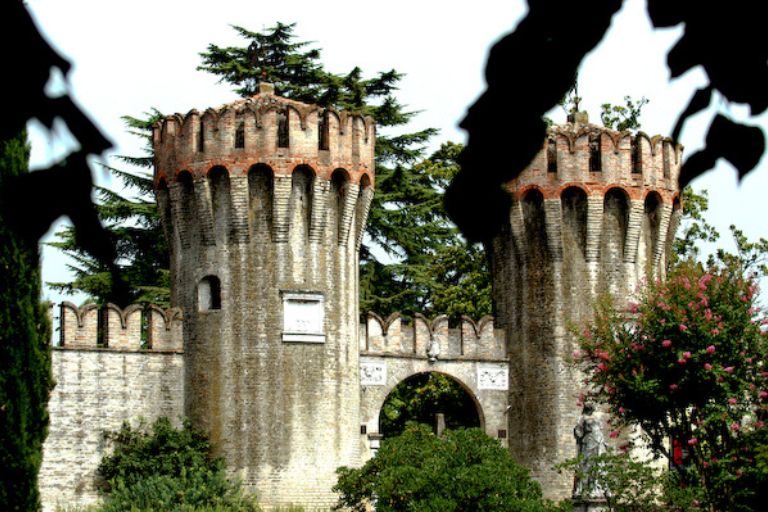
The area combines tradition and modernity, boasting a rich historical heritage – including Roncade Castle – and a strong agricultural and wine-growing tradition. Today, the municipality is a dynamic community, characterised by a high quality of life, thriving businesses and a natural environment that remains well preserved.
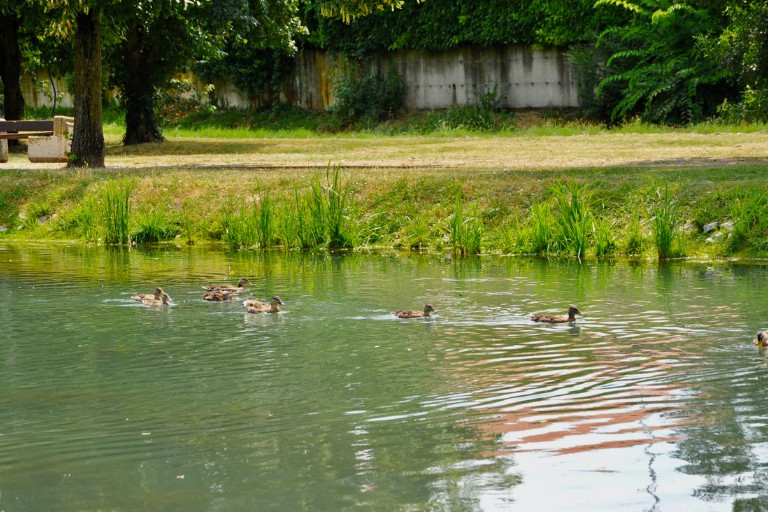
Food
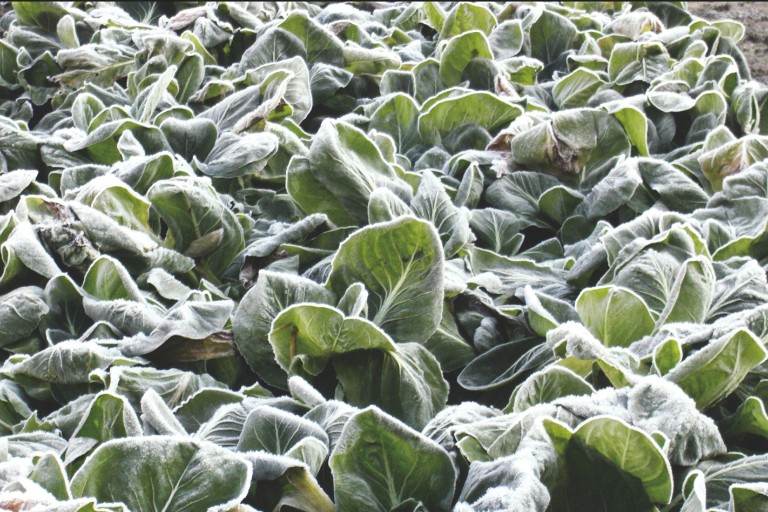
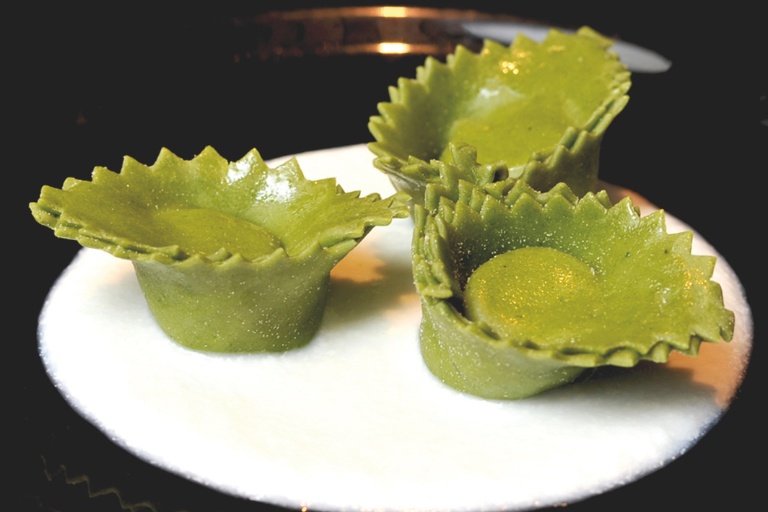
1) Tortelli with Radicchio Verdon of Roncade and Pantierino cheese fondue: a flavorful and refined first course that enhances the authentic tastes of the territory with a creamy, enveloping balance.
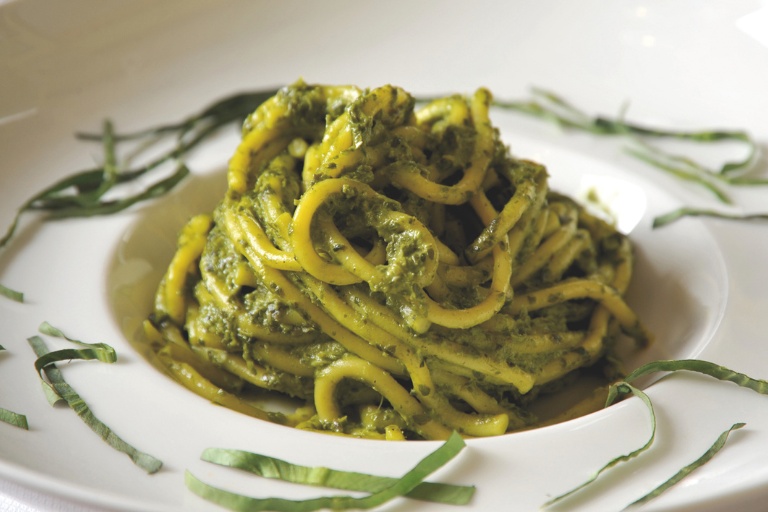
2) Spaghetti with Radicchio Verdon of Roncade: simplicity at the table, served al dente and topped with crispy pancetta for a balanced yet characterful flavor.
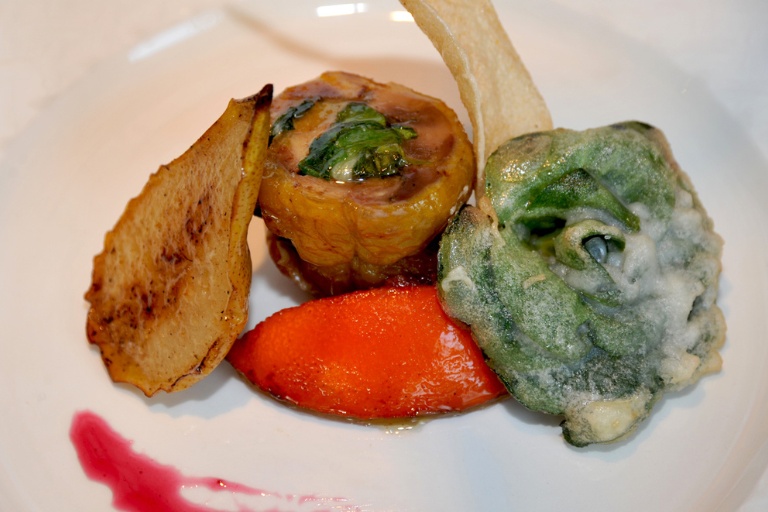
3) Duck roulade with Radicchio Verdon of Roncade: an elegant main course enriched with honey and fruit wedges, with delicate white wine notes enhancing its taste.
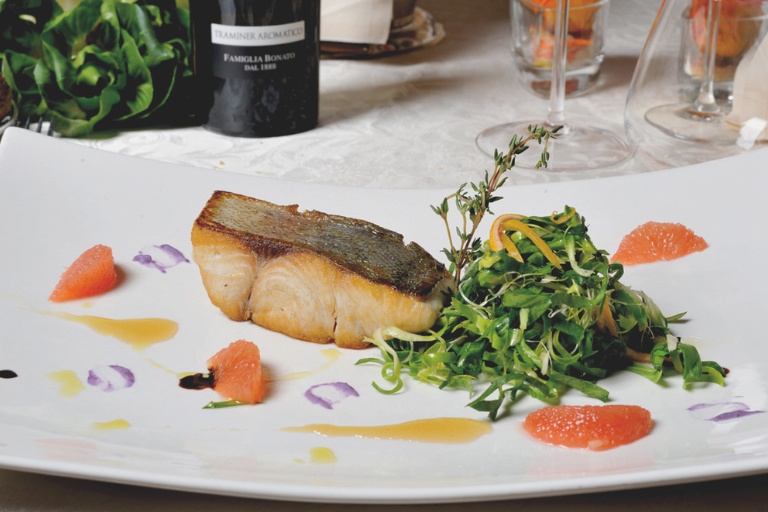
4) Amberjack fillet with Radicchio Verdon of Roncade salad: a light and fragrant dish, enriched with grapefruit slices and aromatic notes of a dessert wine of choice
Wines
Roncade invites visitors to discover a rich winemaking tradition, dominated by the area’s great red wines. Among them stands out Raboso Piave, a native grape variety with a bold, full-bodied, and structured character, enhanced by clay and limestone soils. Alongside it are Cabernet Sauvignon, intense and enveloping, and Cabernet Franc, fresh and aromatic with herbal and red fruit notes. The favorable microclimate also makes the area ideal for Merlot, widely grown and appreciated.
Points of interest
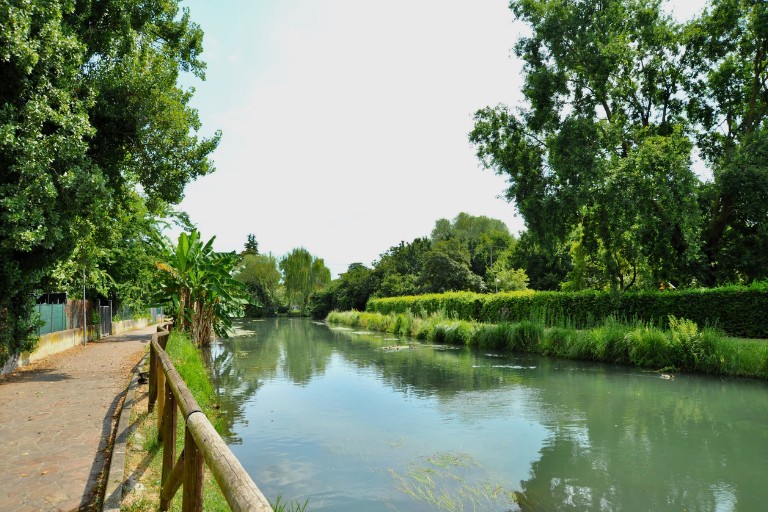
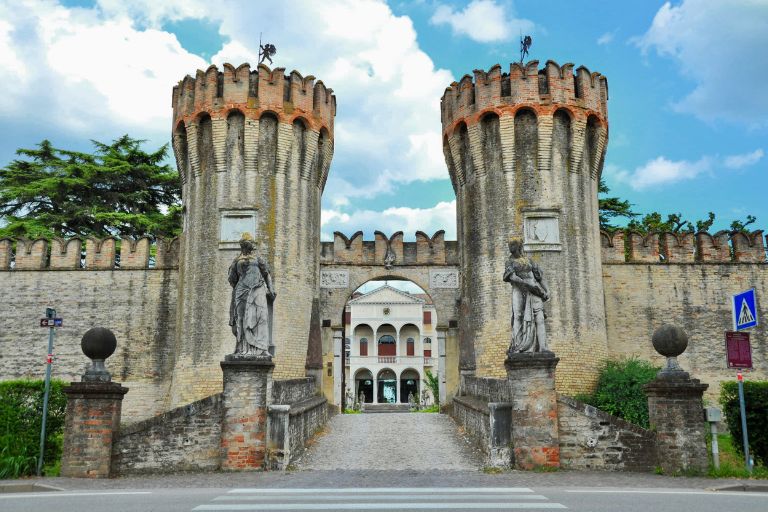
The Castle of Roncade, or Villa Ciani Bassetti, is a charming 16th-century complex and the only pre-Palladian Venetian villa enclosed by walls. With its Renaissance towers, private chapel, and 30 statues set in the garden, it overlooks the Musestre River. Until the early 1960s, local washermen worked along its banks, washing laundry from Venetian noble households transported here by boat from the lagoon.
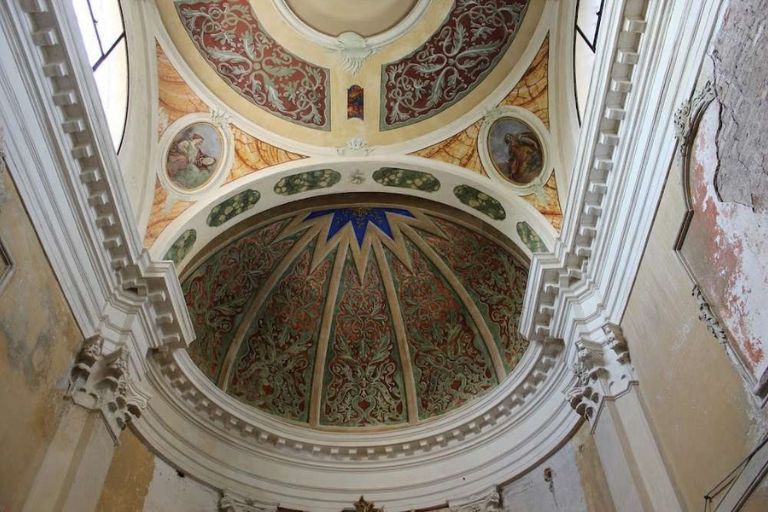
An elegant Baroque gem, the Church of All Saints in Roncade houses valuable 18th-century Venetian artworks by artists such as Francesco Zugno and Gaspare Diziani. Its colorful stuccoes and soft light evoke the refined Venetian atmosphere that has left a deep and lasting mark on this area.
Of great historical interest is the Ancient Church of Saints Cornelius and Cyprian, dating back to the 11th century and representing the original settlement of Roncade. Later abandoned due to the shift of commercial routes and, consequently, community life, it was restored to its former splendor in the early 2000s. It features a tall bell tower and finely decorated interiors, and today serves as a charming venue for cultural events.
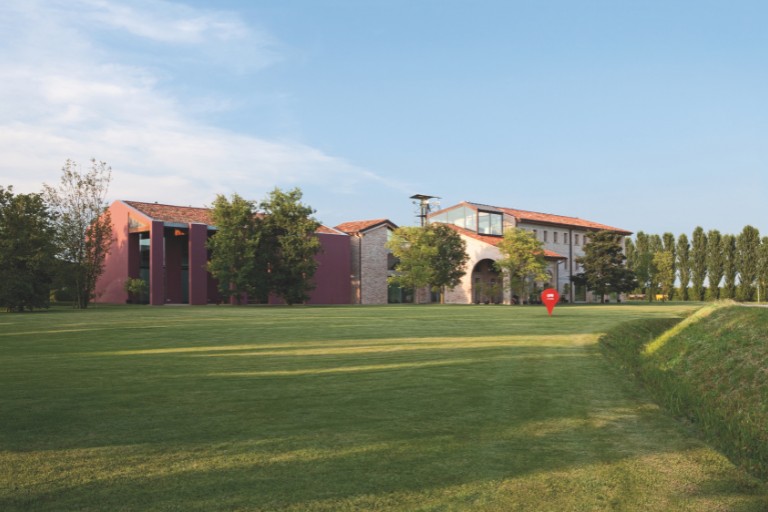
Alongside its history, Roncade looks to the future with H-FARM, an international hub for innovation and education founded by Riccardo Donadon. Set within over 50 hectares of riverside landscape, among poplar groves and sustainable architecture designed by renowned architects, it welcomes students from all over the world.
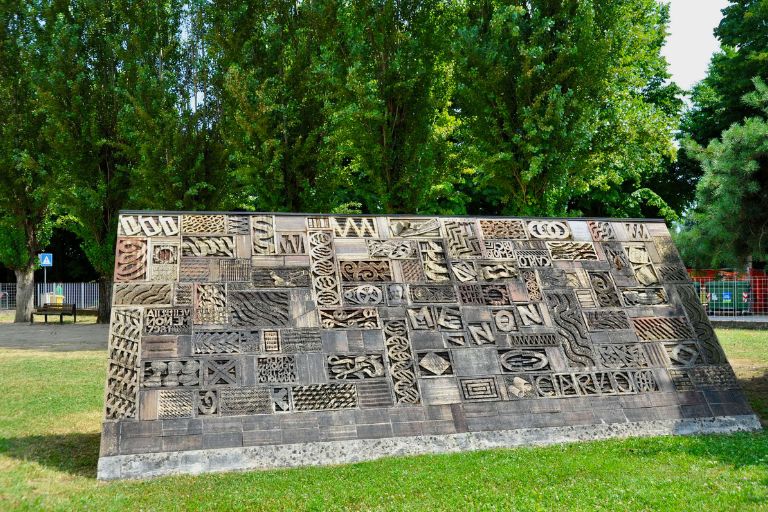
A notable monument is dedicated to Carlo Menon and created by sculptor Alessio Tasca. Located in the garden of Roncade’s library since 2007, it represents the evolution of science — from Galileo Galilei to Carlo Menon, inventor of the “Rebus car,” considered by many the first Italian automobile in 1895.
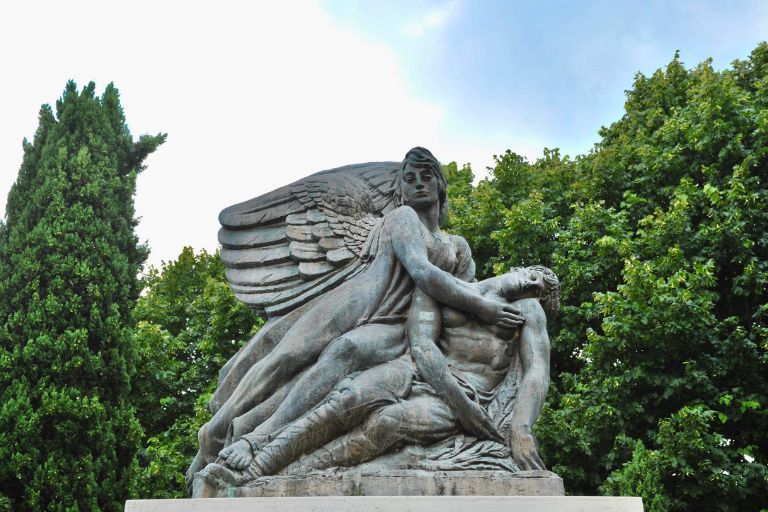
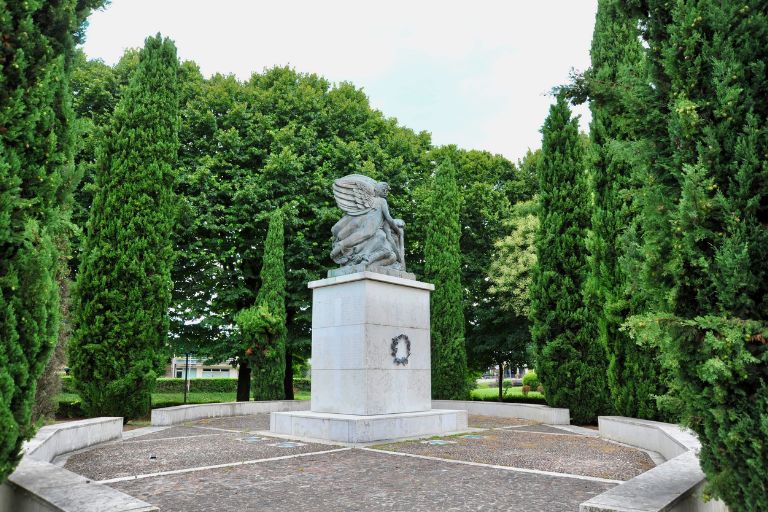
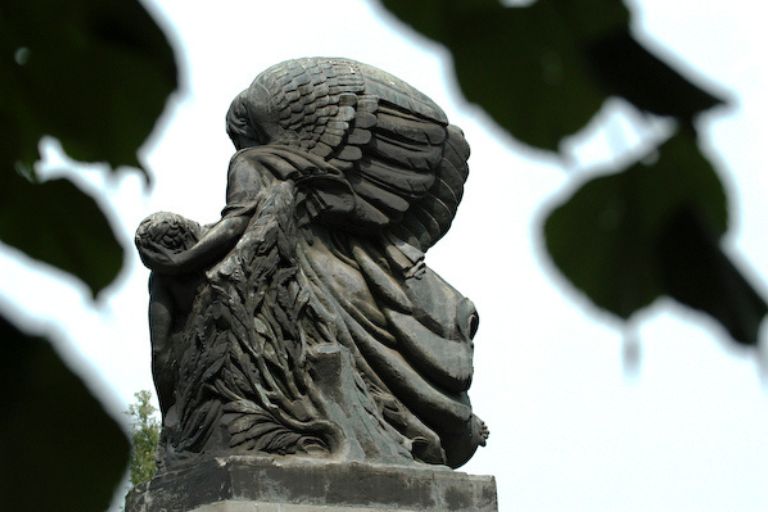
Also noteworthy is the monument to the Fallen of World War I by sculptor Libero Andreotti, a leading figure of the Liberty style. Created in 1922, it depicts a winged Victory holding a fallen hero, symbolizing memory and sacrifice.
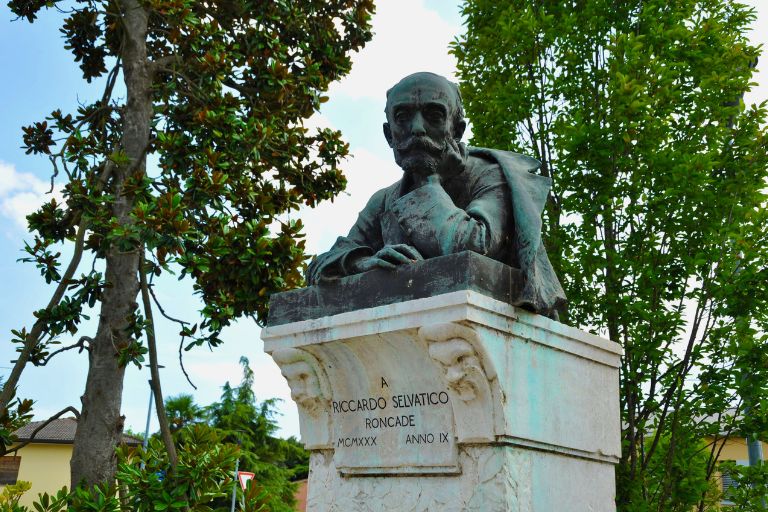
The monument to Riccardo Selvatico honors the Venetian poet, playwright, and politician, founder – together with Antonio Fradeletto – of the Venice Biennale in 1895. As mayor, he stood out for social housing initiatives supporting the most disadvantaged.
Caorle
Overview
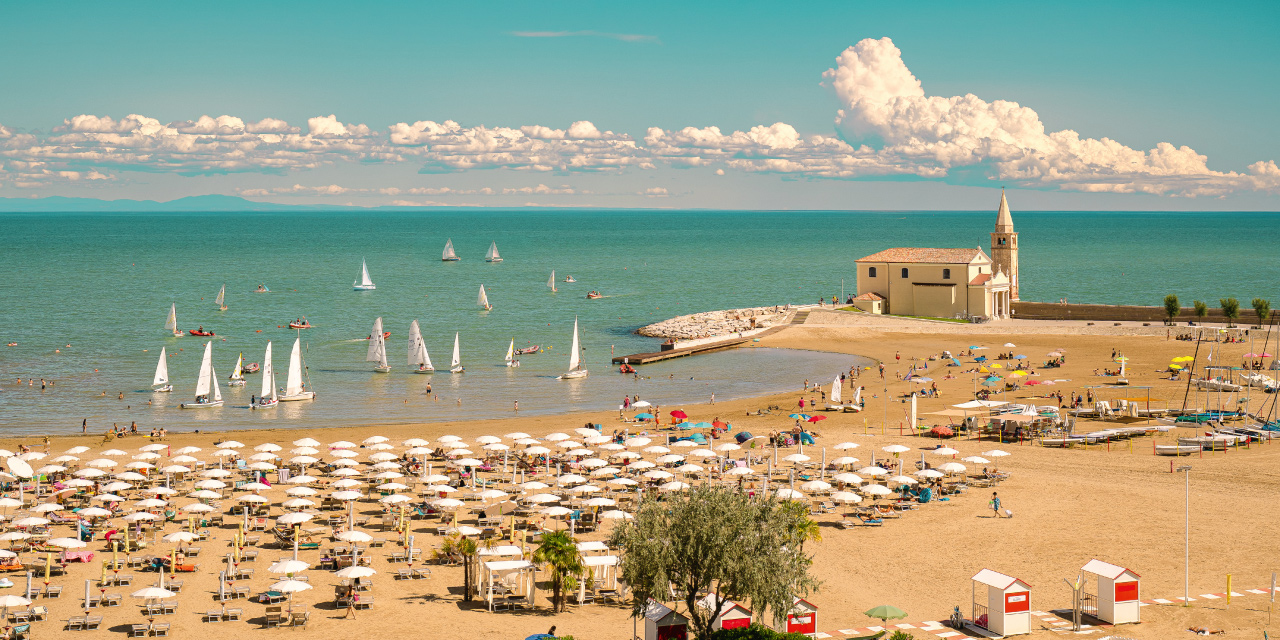
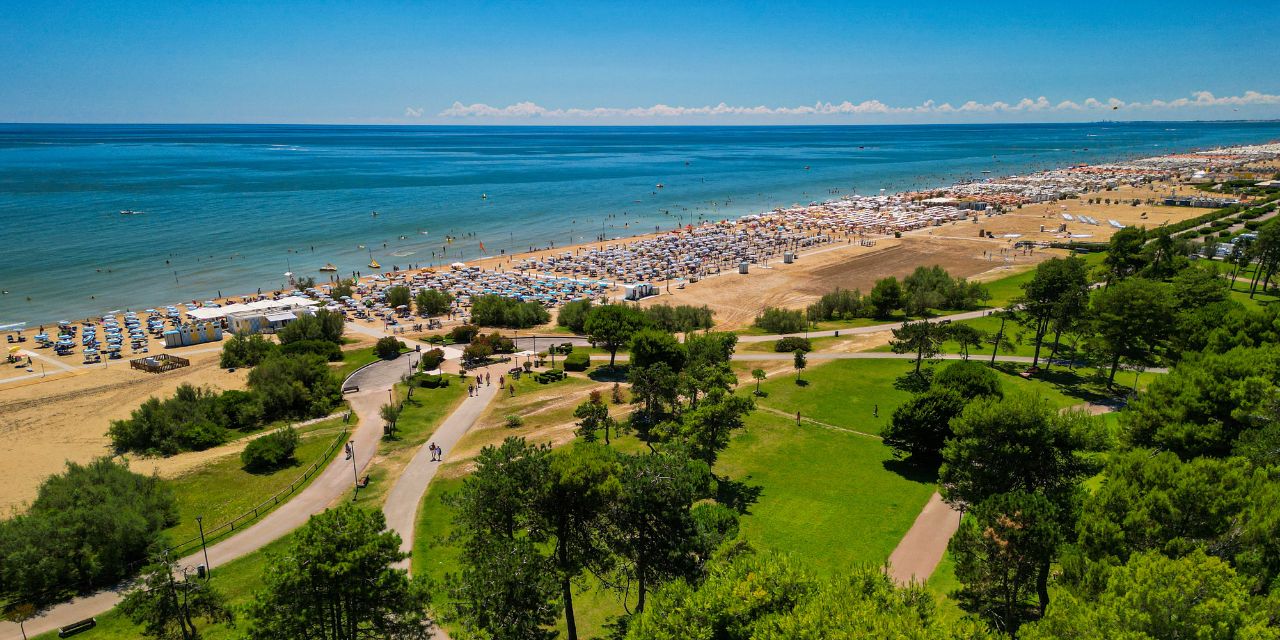
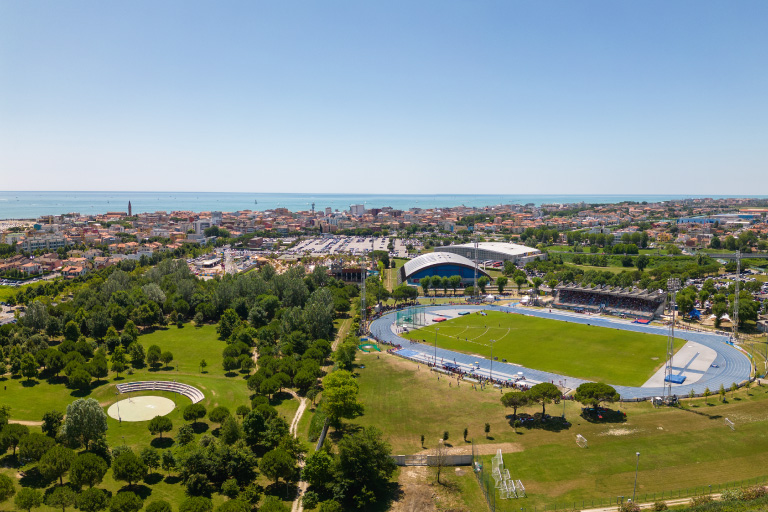
Overlooking the Upper Adriatic, just a stone’s throw from Venice, lies Caorle, characterised by wide beaches of fine golden sand and surrounded by areas rich in history, culture and nature.
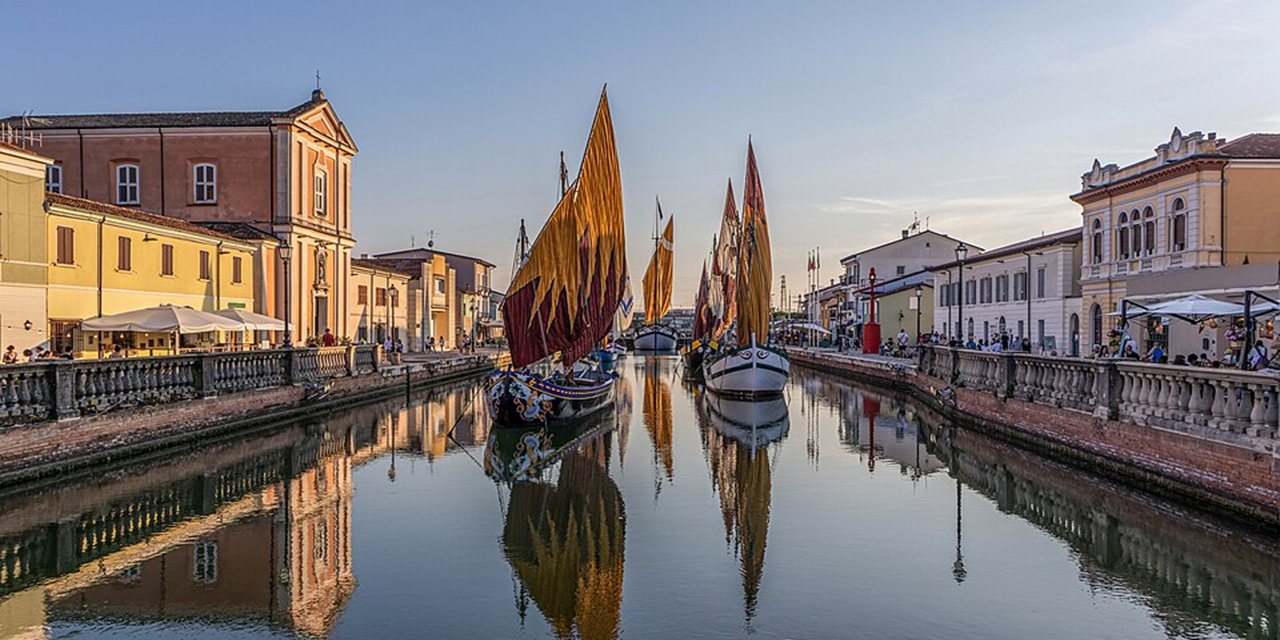
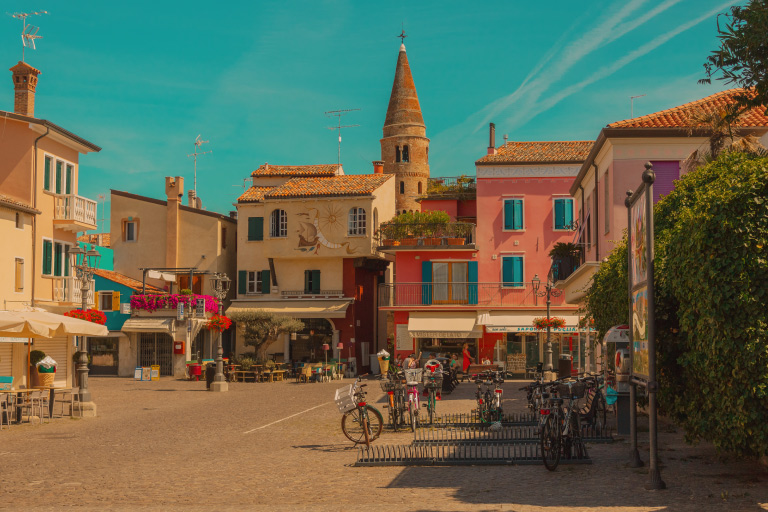
In addition to the beaches of Levante and Ponente, Porto S. Margherita, Lido Altanea and Duna Verde, and the unspoilt nature of the Caorle lagoon, this small seaside village boasts a historic centre characterised by ‘campi’, narrow streets, colourful houses and lanes that, until recently, were criss-crossed by canals – now filled in – and which, for this very reason, can be described as ‘little Venice’.
In Caorle, you can also soak up the seafaring tradition, which can be savoured through the typical local dishes on offer. Fishing continues to be practised to this day, ensuring fresh produce every day.
Caorle is the ideal destination for a holiday, offering experiences to suit every taste.
TIPICAMENTE CAORLOTTO is the project through which the local council, in collaboration with local businesses, showcases the true spirit of Caorle. It is an initiative that highlights local excellence and the experiences born from the interplay between the sea, the lagoon and the hinterland.
Here, the fishing tradition coexists with a vibrant food and drink industry: local wines, craft beers, honey, pasta, walnuts, and organic oysters and clams. These products arrive directly on restaurant tables and tell a story of hard work, culture and landscape.
A tangible way to celebrate what makes Caorle not just a tourist destination, but a community capable of transforming its natural and productive heritage into an experience.
Food
Caorle Cuttlefish Stew
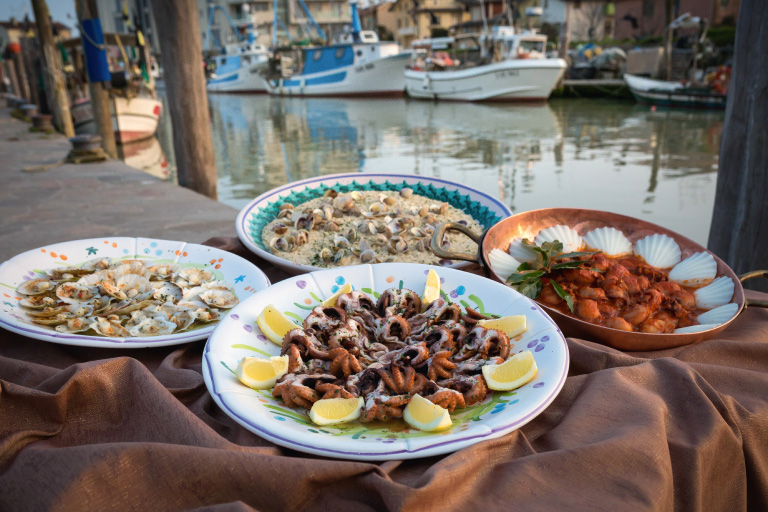
“El broeto de seppe de Caorle” is a traditional dish of Caorle. It is a stew made with cuttlefish, white wine, vinegar and tomato purée which, as well as being eaten on its own, can be served with white polenta or slices of toasted bread.
Moscardino PDO
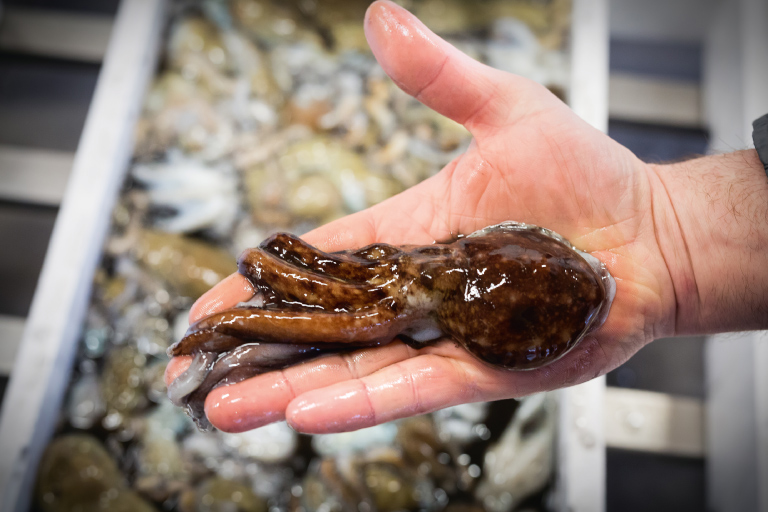
This species of small, brownish octopus is particularly fond of our sandy seabeds, a natural habitat where it reproduces between January and May, and is fished throughout the year.
The moscardino is undoubtedly the star of recipes that have shaped the history of Caorle’s cuisine: stewed moscardini with cherry tomatoes, moscardino salad and spaghetti with moscardini are just some of the dishes in which the prince of our sea is served at the table.
White Canestrello
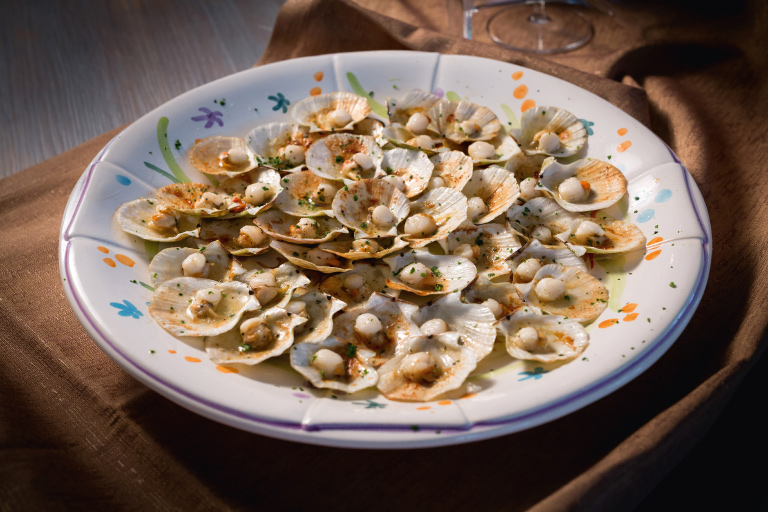
The white scallop is a mollusc typical of our seabed, finding in the waters off Caorle an ideal environment in which to reproduce and live. It is smaller than the scallop, another delicious mollusc from our area that is an absolute must-try, and has a very delicate flavour, excellent in a gourmet risotto or simply grilled. Don’t forget to pair it with a Pinot Bianco wine or a Birra Nera.
Organic clams
Caorle’s organic clams are farmed and harvested in the stretch of sea off Vallevecchia, within a clearly defined marine area and in full compliance with all sustainability criteria. This prized shellfish is the star of a dish that is a perennial favourite in our culinary tradition: spaghetti with clams (known in Veneto as ‘spaghetti coe pevarasse’), to be served with a sprinkling of freshly ground black pepper and chopped parsley, accompanied by a dry white wine.
B2O Craft Beer
Water, barley, hops and yeast blended according to an ancient original recipe: this is how the beer from the B20 Craft Brewery is made, in the Brussa Nature Reserve (Strada provinciale Portogruaro Brussa, 218). Activities include tastings of red, amber, dark and pale beers, which also feature samples of local specialities such as the local salami and a tour of the cereal fields: a truly immersive experience not to be missed.
Regional wines and locally produced wines
Just a few kilometres from Caorle, in the rural villages of Ca’ Corniani, Marango and San Gaetano, there are many wineries where, as well as tasting, you can watch the winemaking process and the bottling of our region’s famous DOC wines. It would be impossible to leave without first trying this experience. The experiential tour exploring the Lison Pramaggiore DOC Wine Route is also very popular.
Punti d'interesse
· Cathedral and bell tower
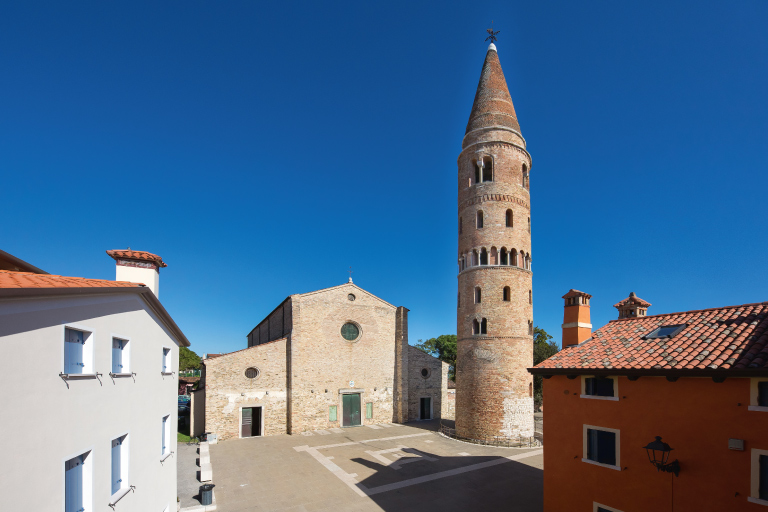
The Cathedral of Santo Stefano dates back to 1038. Its Romanesque architecture, enriched by Byzantine influences, features a simple yet majestic façade that immediately conveys a sense of grandeur and solemnity. Next to the Cathedral stands the cylindrical bell tower, also dating back to the 11th century, one of Caorle’s most recognisable landmarks with its distinctive cylindrical shape and conical spire. It is 42 metres high and leans slightly towards the east.
· Sanctuary of the Madonna dell’Angelo
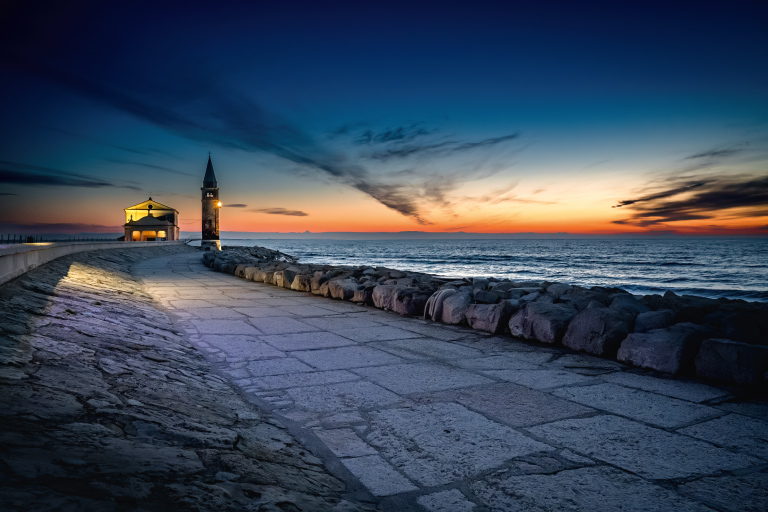
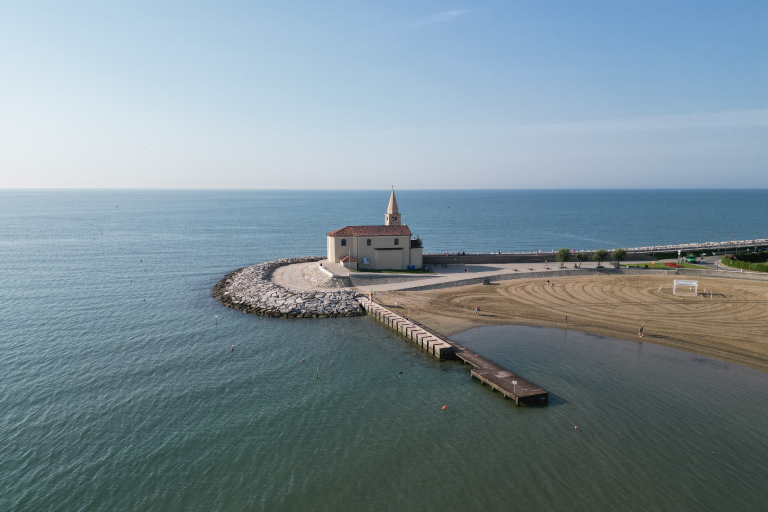
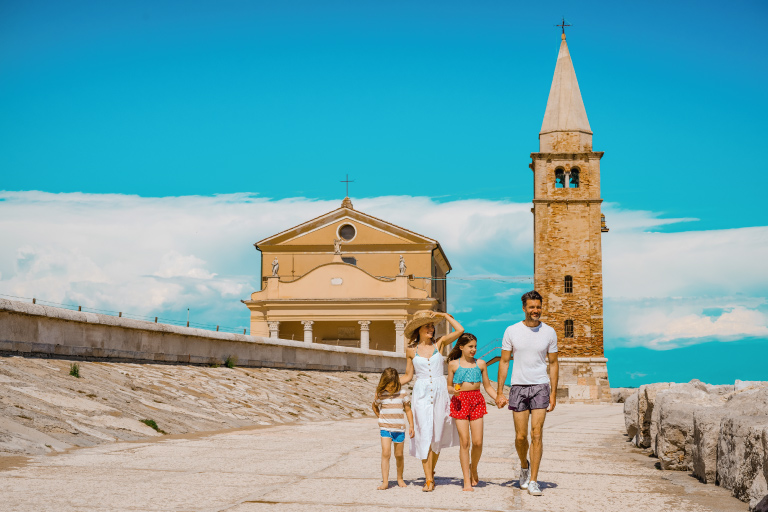
The Sanctuary dates back to 1751 and is dedicated to the Madonna dell’Angelo, patron saint of fishermen. It is a place of great devotion for the local inhabitants, who regard her as a true spiritual guardian. Adjacent to the church stands a Romanesque bell tower dating back to the 13th century. Quadrangular in shape, the bell tower was probably used as a watchtower for sailors, an ancient landmark that still signals the presence of the church by the sea today.
· ScoglieraViva
One of the most beautiful walks along the Upper Adriatic, thanks to its boulders, which have been sculpted since 1993 by internationally renowned artists who come to Caorle every two years for an event that has now become an unmissable fixture. ScoglieraViva is not only an open-air art gallery, but also a place where you can admire the seascape in all its beauty.
· Historic centre
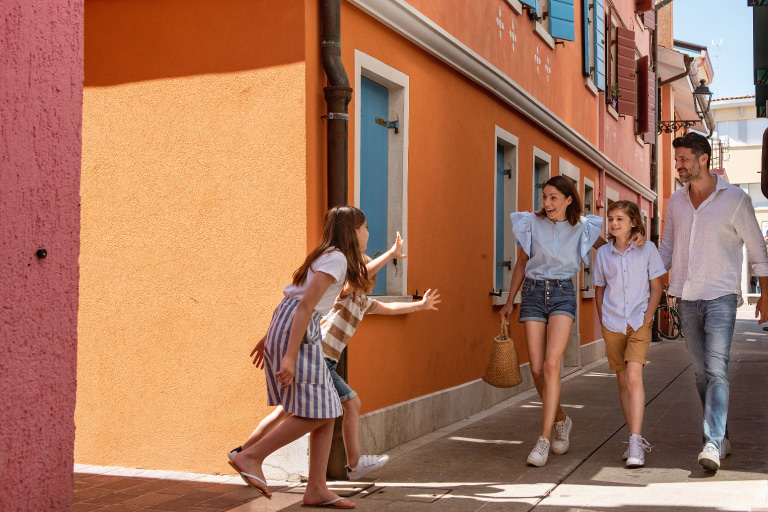
One of the features that makes Caorle a must-visit destination is its extraordinary architecture. As you stroll through the narrow streets of the centre (e.g. Calle Lunga), you’ll find yourself immersed in a riot of vibrant colours, reminiscent of the spirit of Venice but with a character all of its own. The houses, painted in shades of yellow, orange and blue, create a fascinating contrast with the sky and the sea, offering a new visual delight at every turn.
· Fishing harbour
A stroll through the fishing harbour offers the chance to immerse yourself in the authentic atmosphere of an ancient tradition, observing at close quarters the fishing techniques still used today by local fishermen.
· Caorle Lagoon
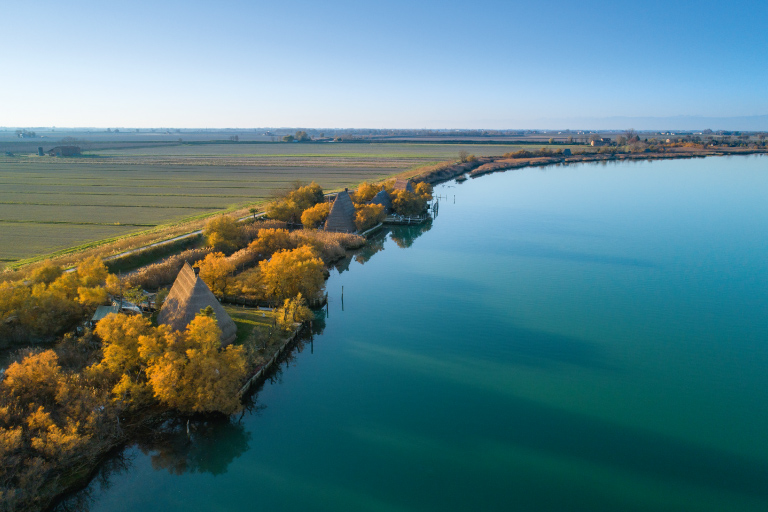
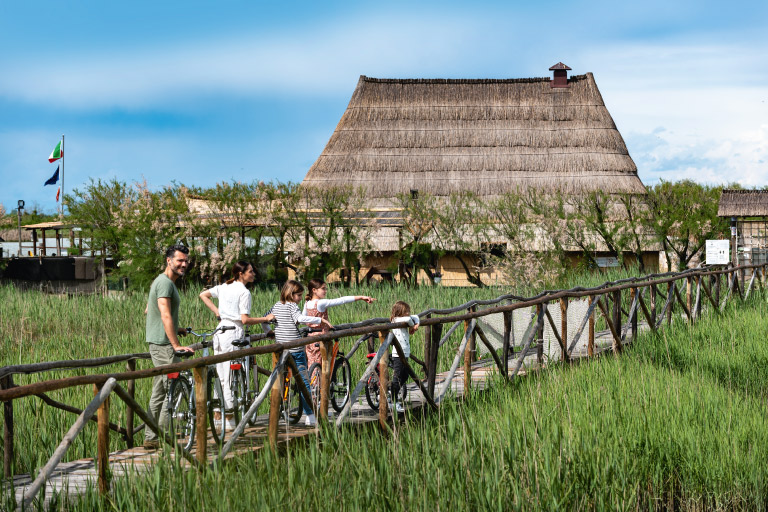
The Caorle Lagoon is a protected nature reserve, characterised by picturesque views and unspoilt nature. By boat or bicycle, you can discover a fantastic world of calm waters and dirt tracks, so dear to Ernest Hemingway. The symbols of this area are the ‘casoni’, ancient fishermen’s dwellings built from simple materials such as marsh reeds and wood. These structures, once shelters for fishermen, are now a symbol of Caorle’s lagoon tradition.
· Vallevecchia Nature Reserve
A unique nature reserve offering the chance to immerse yourself in unspoilt nature teeming with biodiversity. The best way to explore Vallevecchia is to follow its many trails, which wind through fascinating ecosystems, allowing you to walk amongst golden dunes, dense pine forests and cultivated fields. The trails, which are well-signposted and maintained, offer the perfect blend of adventure and relaxation, making the oasis ideal for families, keen walkers or simply nature lovers.
· Rural village of Ca’ Corniani
Just 3 km from Caorle lies Ca’ Corniani, a small rural village steeped in history and charm. This place is known for being the first example of a land reclamation project carried out by private individuals in the Venetian marshes, a project that transformed a lagoon landscape into a model agricultural area. The area has recently been enhanced by the creation of a network of cycle paths linking the village of Ca’ Corniani to the town of Caorle.
· National Museum of Maritime Archaeology
The National Museum of Maritime Archaeology in Caorle takes visitors on a fascinating journey through centuries of history, featuring extraordinary artefacts from the Adriatic Sea and the Caorle coastline, dating from the Bronze Age to the modern era. On the ground floor, an interactive experience awaits you, dedicated to the brig Mercurio, a Napoleonic warship sunk during the Battle of Grado in 1812. The Museum is not only a destination for history enthusiasts, but also an engaging attraction for families, schools and visitors of all ages.
· Murals and Street Art at the Caorle Sea Festival
The Caorle Sea Festival is the biennial street art event that transforms Caorle into a veritable open-air museum, combining art, culture and environmental sustainability. International artists create spectacular murals inspired by the sea, fishing and local traditions, bringing colour to public and private buildings, schools and urban spaces with works that capture the authentic spirit of the town.
Video Tappa 02

Giro d'Italia Women 2026 | Tappa 2 | Giro Express
31 May 2026Foto Tappa 02

Giro d’Italia Women 2026 | Tappa 2 | Best of
31/05/2026
Giro d’Italia Women 2025 | Tappa 2 | Best of
07/07/2025