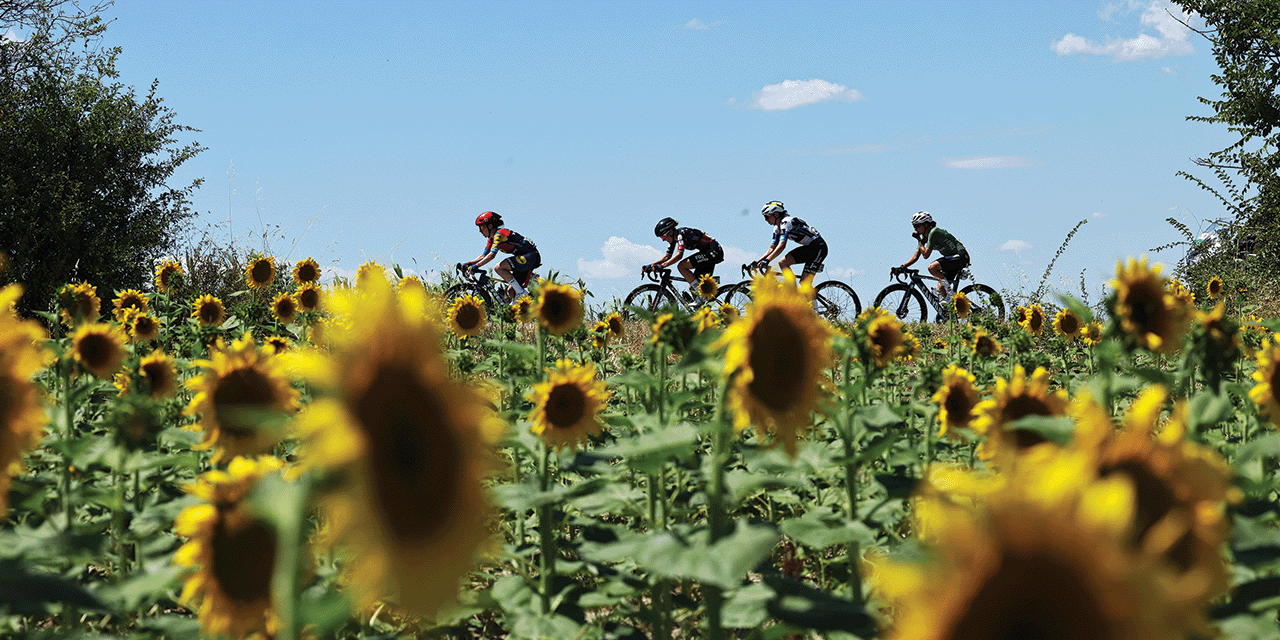
Every proper stage race features a few fractions that defy easy categorisation – the ones you’re never quite sure how to label, wondering whether they might favour sprinters, climbersm, or those dynamic in-betweeners often referred to as breakaway specialists: these riders can handle every kind of terrain, thrive in uncertainty, and aren’t afraid to move early if the opportunity presents itself.
At the 2026 Giro d’Italia Women, we count three good chances for breakaway riders to shine. The first may come on Stage 3, taking the peloton from Bibione to Buja, in the north-eastern region of Friuli. After two likely sprint finishes in the opening stages, it’s not impossible that Stage 3 could also end in a bunch finish, but this time the riders will face a significant obstacle. With around 17 km to go, the peloton will take on the Montenars climb (Category 3): 3 km long in total, but truly tough only in its second half, where the gradients are relentlessly in double digits. Keeping the race together will be difficult for the teams, just as staying in the peloton will be hard for the sprinters. Someone will certainly try to make a move. And beyond a prestigious stage win, the Maglia Rosa may also be up for grabs, ensuring a fierce battle.
The stages for breakaways
After the two mountain stages that will reveal the GC contenders, and the expected sprint in Brescello, Stage 7 offers another almost certain opportunity for attackers.
The longest stage of the 2026 Giro Women – 165 km from Sorbolo Mezzani to Salice Terme – begins with 120 km of dead-flat roads. But the final section can be read in many ways, featuring the long but gentle Pietramagna climb (Category 3), and especially the ascent to the Castello di Oramala (Category 3, 4.5 km at 7.4%), likely the key moment of the stage. From its summit, 24 km remain to the finish – and with the daunting Colle delle Finestre looming the following day, it seems very likely that riders further down the GC may be given freedom to attack.
Then comes the final stage, the Saluzzo circuit – anything but a simple parade. For the GC riders, the climbs may be a little too far from the finish to launch decisive moves, but for anyone targeting a final stage win, the terrain is perfect for creativity.
Across the stage’s 2,200 metres of total elevation gain, the riders will first tackle the brutally hard Montoso climb (Category 1, 9.1 km at 9.2%), placed 88 km from the finish.
Then come the climbs of Colletta di Paesana (Category 3) and Colletta di Brondello (Category 2, 4.6 km at 7.8%), with the latter cresting 35 km from the line.
For any rider disappointed with her Giro Women, these Piedmont roads offer one last, real chance to go home with a beautiful memory.
Discover the details of all the stages of the Giro d’Italia Women 2026!