Closes at
See all
Save the dates of your favourite races! Sync your calendar

Climbs & Time Trials: Ca’ del Poggio, Moruzzo, Passo Sant’Antonio

14/05/2026

The Giro d’Italia Women is rolling out an ambitious project to map the sport’s most iconic climbs – building a living archive of ascents that have shaped (and will continue to shape) cycling history, while giving fans a benchmark time to chase.

Across the nine stages, six climbs will feature official timing points, set either at the KOM banner or the stage finish. Today, we break down the first three ascents ready to ignite the race.

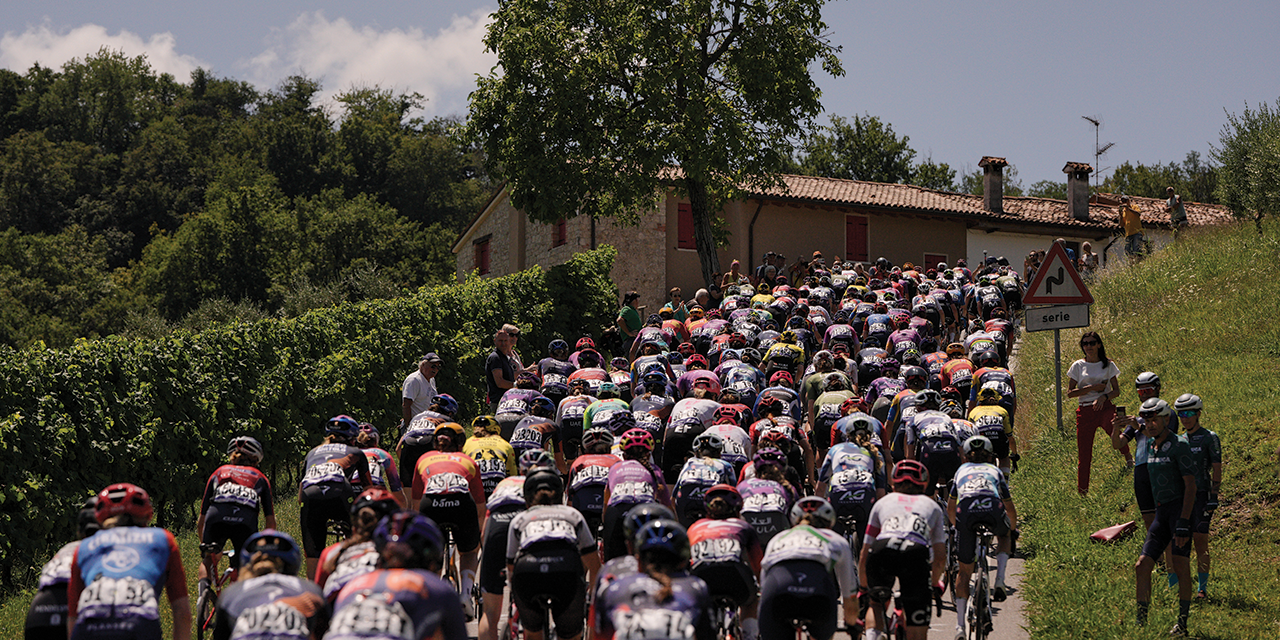
Muro di Ca’ del Poggio

he Muro di Ca’ del Poggio isn’t just a climb, it’s a full-blown cycling arena carved into the Prosecco Hills, now a UNESCO World Heritage site. Located in San Pietro di Feletto, in the province of Treviso, it’s short, sharp, and absolutely vicious: 1.15 km at an average gradient of 12.3%, with ramps biting up to 19%.

Officially named in 2010, the “Muro” quickly became iconic, even twinned with northern legends like the Muur van Geraardsbergen and the Mûr-de-Bretagne – part of a vision to connect Europe’s most feared “walls.”

But it’s the Giro d’Italia that truly made it legendary. Since 2009, every passage turns this strip of tarmac into a roaring, pink-drenched spectacle packed with fans.

It’s hosted everything from the Giro U23 to the women’s race (including last year’s stage to Pianezze) and even the 2010 Italian National Championships. One of its most innovative moments came in 2018, when a real-time pursuit time trial saw riders set off based on actual GC gaps, turning the climb into a head-to-head showdown against both the clock and their rivals.

Montenars

Montenars is a small hillside town at the foot of the Julian Prealps, north of Udine – quiet, remote, and surrounded by forests and rugged terrain. Its landscape remains largely untouched, shaped by natural features like the vast Villanova cave system.
The area also carries deep historical scars, having been one of the hardest-hit zones during the 1976 Friuli earthquake.

On the road, the challenge comes in the form of a 1.9 km kicker averaging 9.1%, crested 20 km from the finish of Stage 3 (Bibione–Buja). It’s the only real obstacle of the day – but that just makes it more dangerous.

Expect teams to light it up to shed the pure sprinters, or a daring attacker to go all-in here, trying to disrupt the fast finishers’ plans and force a late selection.

Passo di Sant’Antonio

The high mountains are very much on the menu. On the 138 km stage from Longarone to Santo Stefano di Cadore, the peloton tackles Passo Tre Croci and the Passo di Sant’Antonio before a decisive double ascent of Costalissoio.

The timed climb is the Passo di Sant’Antonio, topping out at 1,476 meters and linking the Comelico with Cadore between Padola and Auronzo. Its name comes from an ancient shelter dedicated to Saint Anthony Abbot, once a key refuge for traders and travelers crossing these mountains long before World War I.

From a racing perspective, it’s a serious test: 8.3 km at an average gradient of 7.6%. Positioned 43 km from the finish, it’s perfectly placed to start thinning the bunch ahead of the double climb of Costalissoio (2.7 km at 9.8%).

The pass has already featured in the Giro d’Italia, notably in 2011 and again in 2018 on a strikingly similar stage design. On that occasion, it helped shape the race before Simon Yates launched a memorable solo victory.

Follow us
on social media
#GirodItaliaWomen
top sponsor
official partners
institutional partners
official suppliers