




learn more
technical info
profile
map
technical info
Route
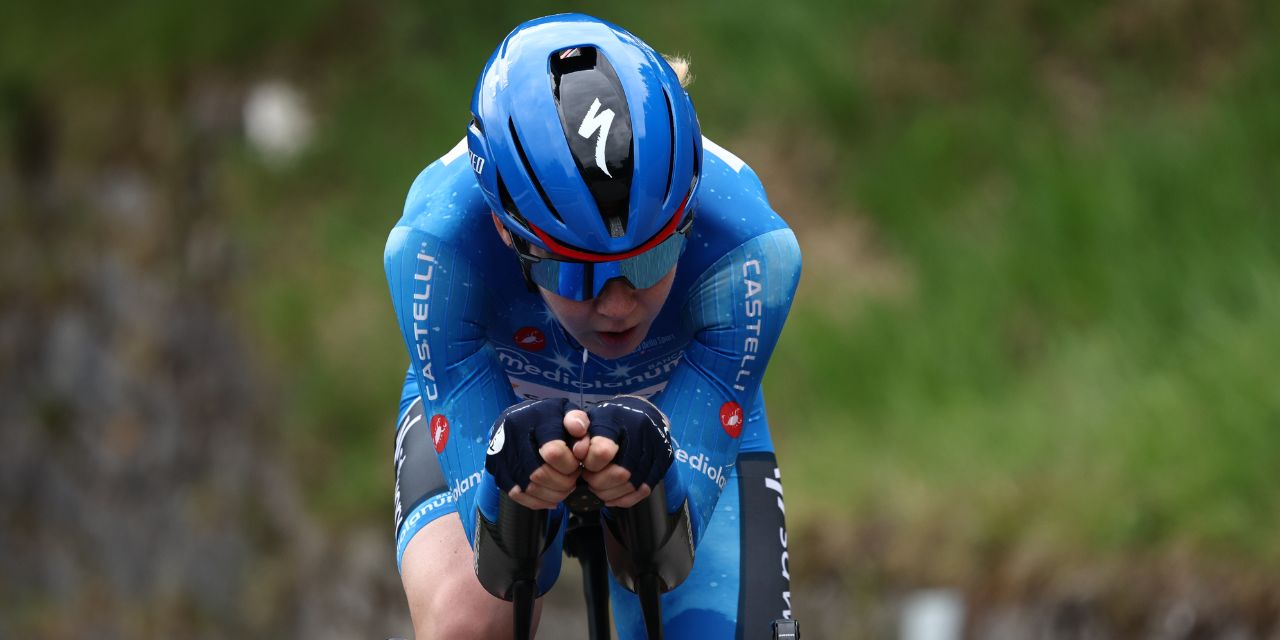
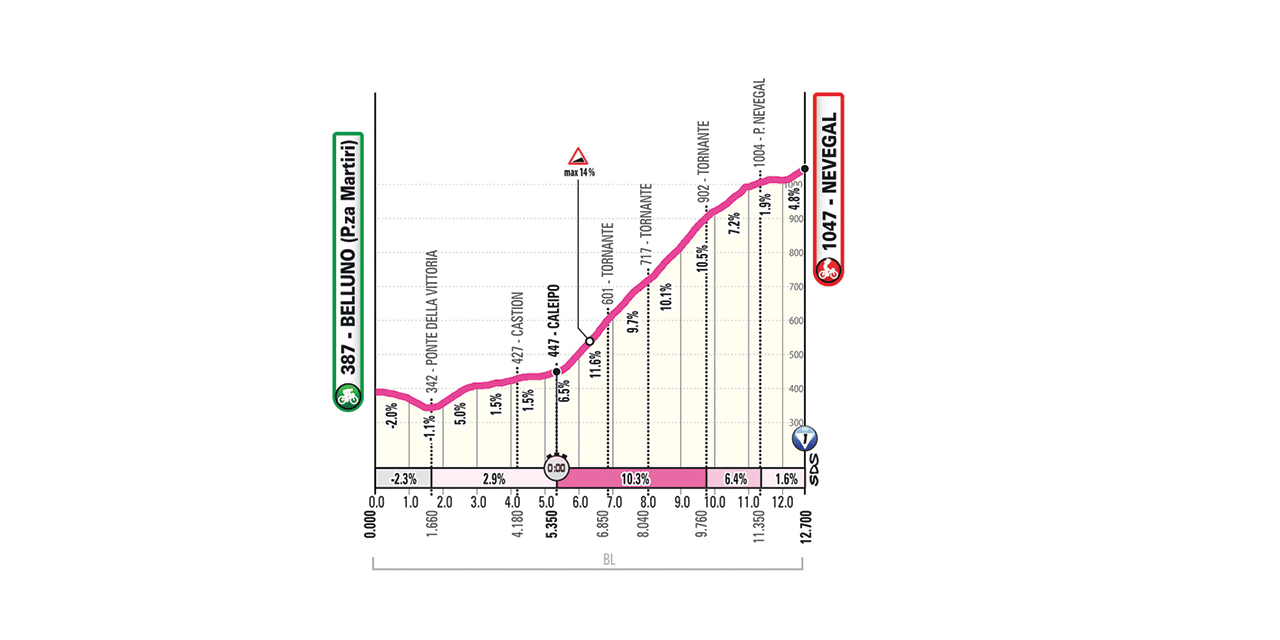
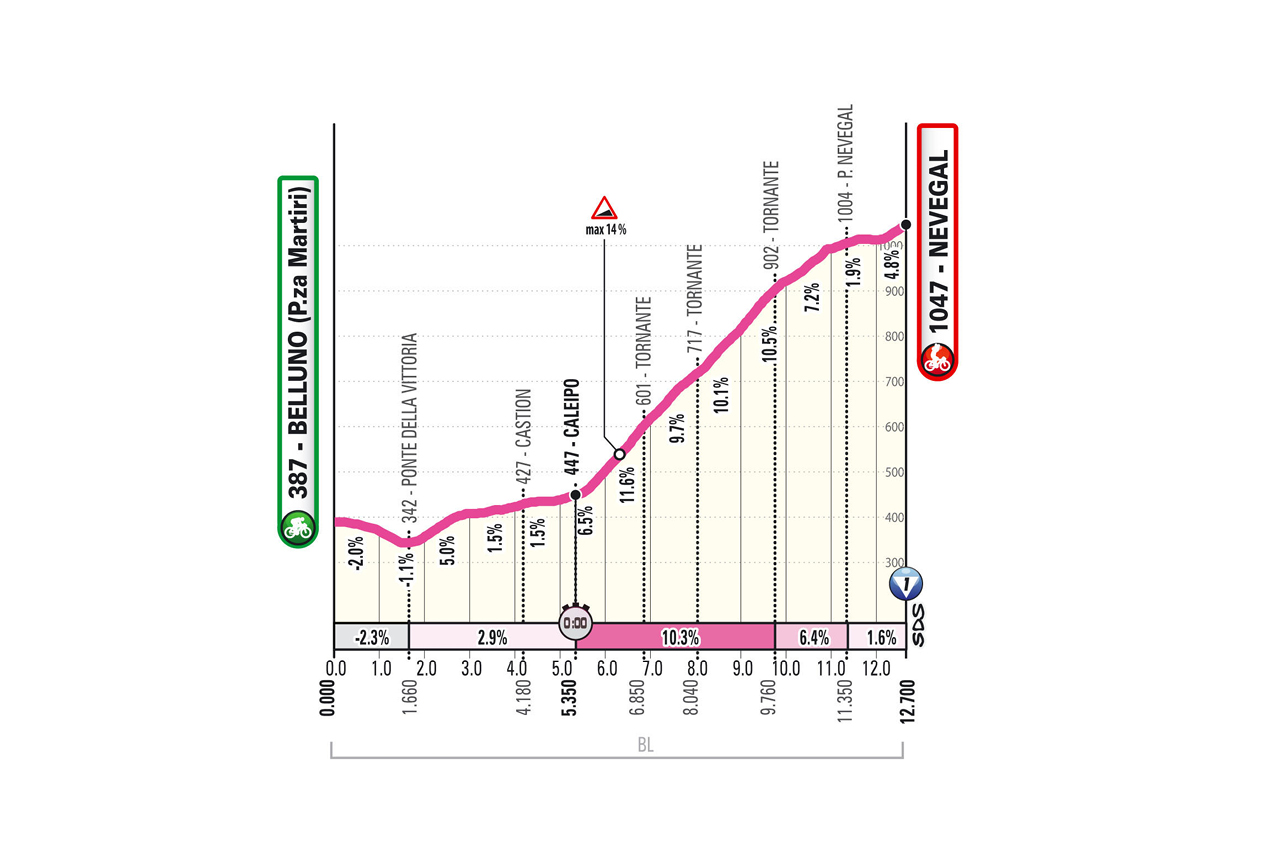
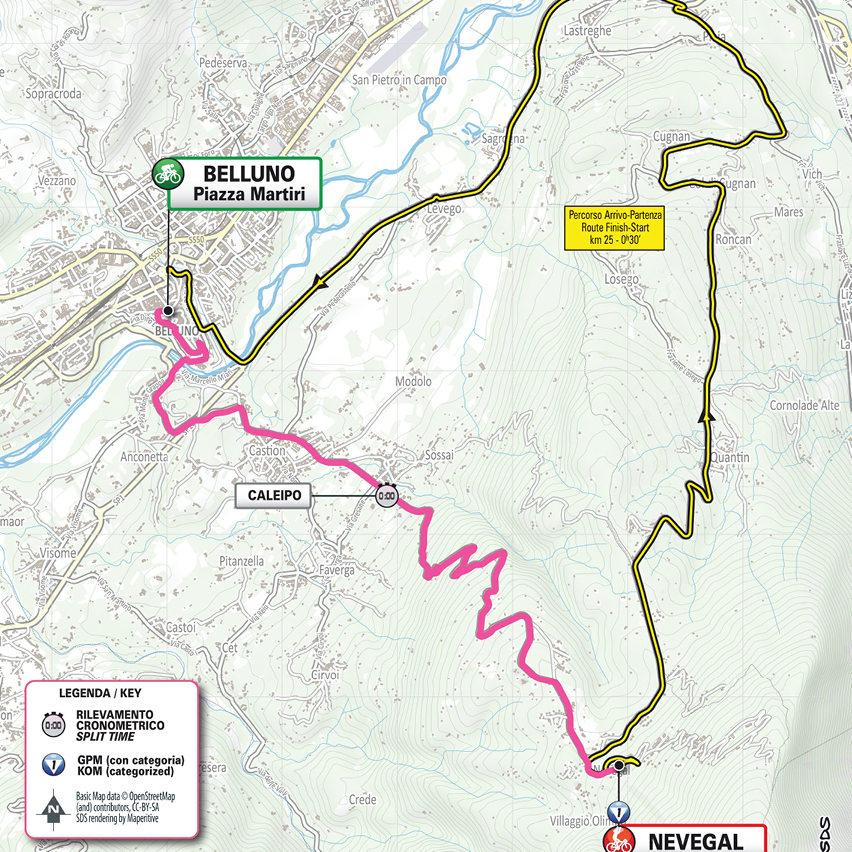
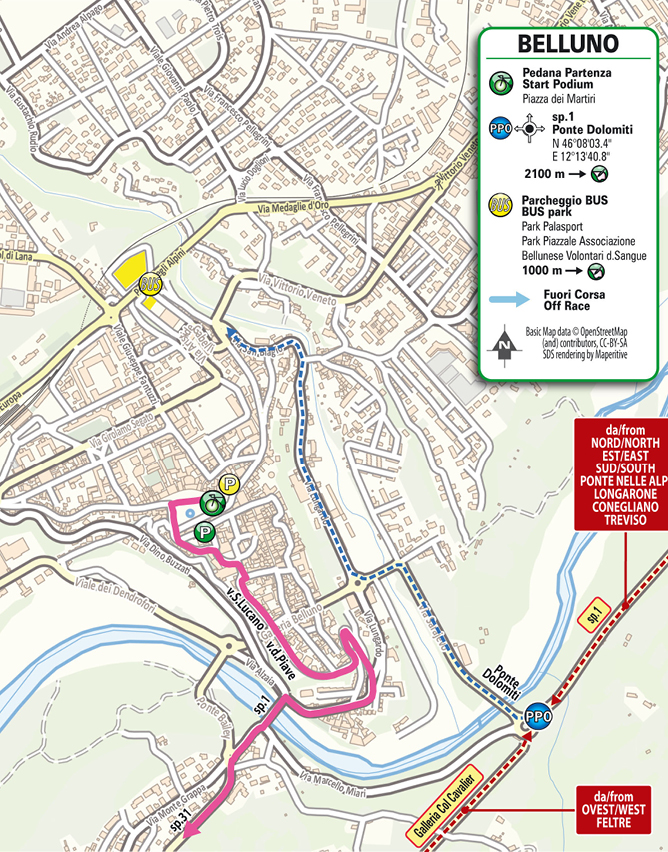
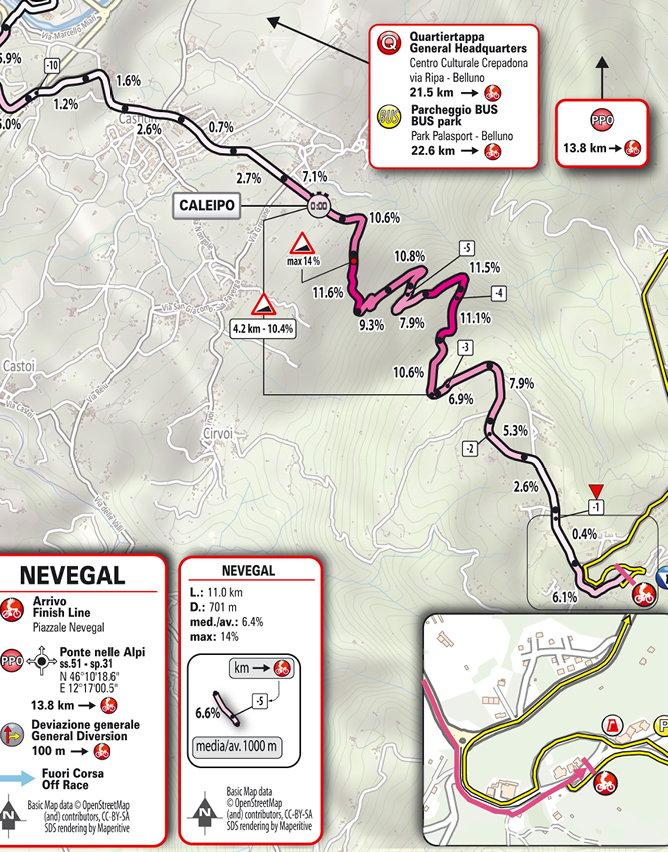
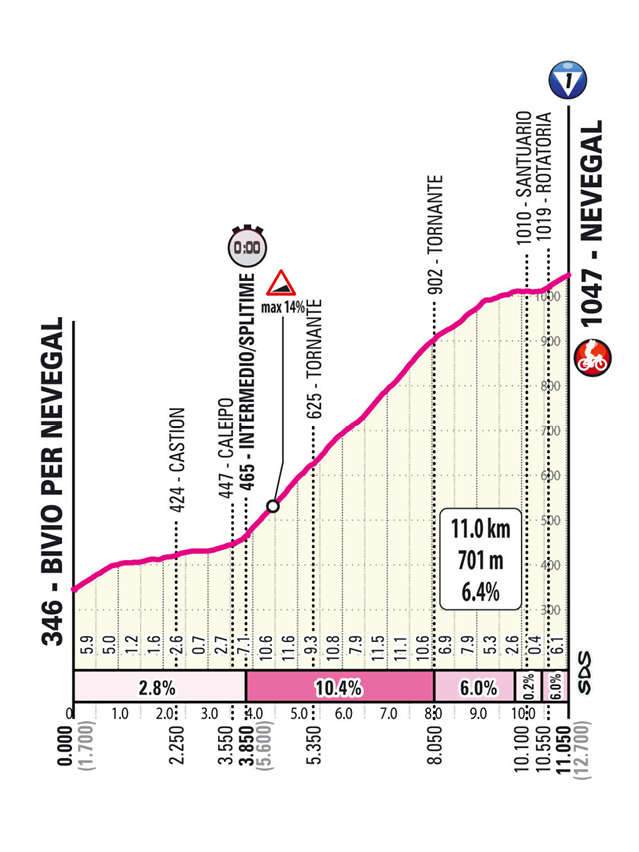
An individual time trial, entirely uphill overall and divided into three sections. The opening part runs downhill through the historic centre of Belluno, technical in nature, on narrow roads with sections of cobbled surface, as far as Ponte della Vittoria (Piave River), where the climb begins. The ascent continues at a relatively moderate gradient up to the intermediate time check in Caleipo. From there, the final section features 4.5 km of hairpins, consistently above 10%, with prolonged ramps reaching 14%. Near the finish, the gradient eases slightly.
Final kilometers
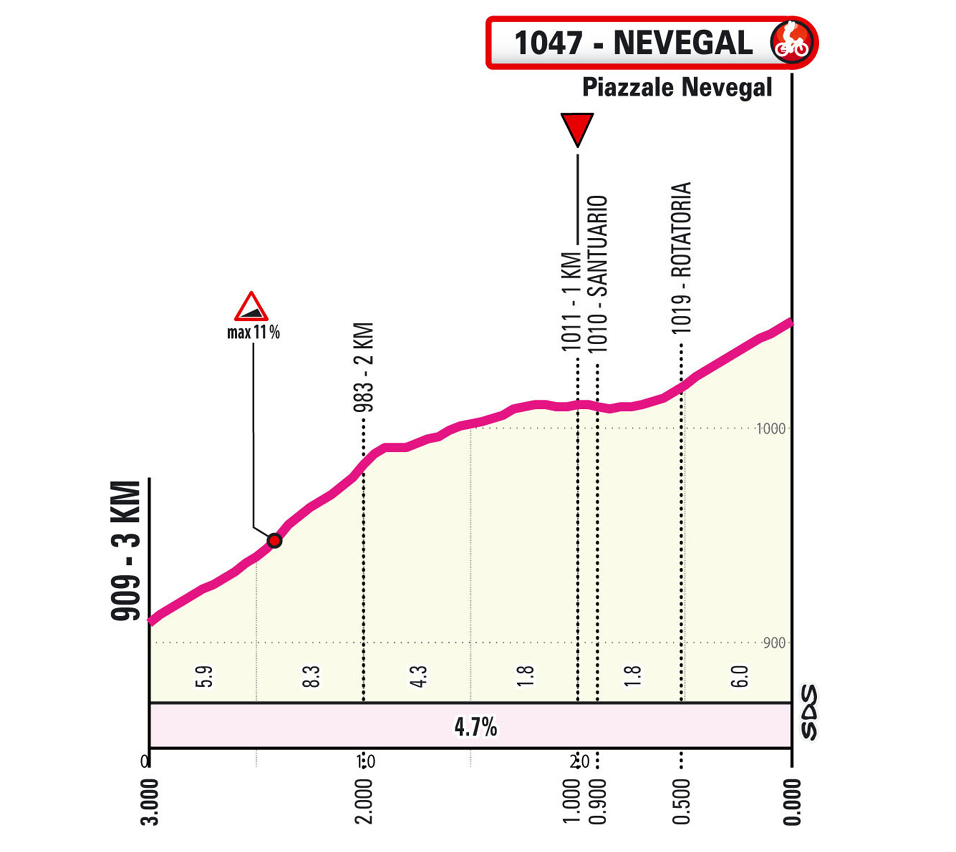
The final kilometre begins almost flat, before steepening after the Nevegal roundabout (400 m from the finish). Final straight: 250 m at 5%, road width 6 m.
start / finish
climb detail
final kilometres
tourist info
Host city:
Belluno
Overview
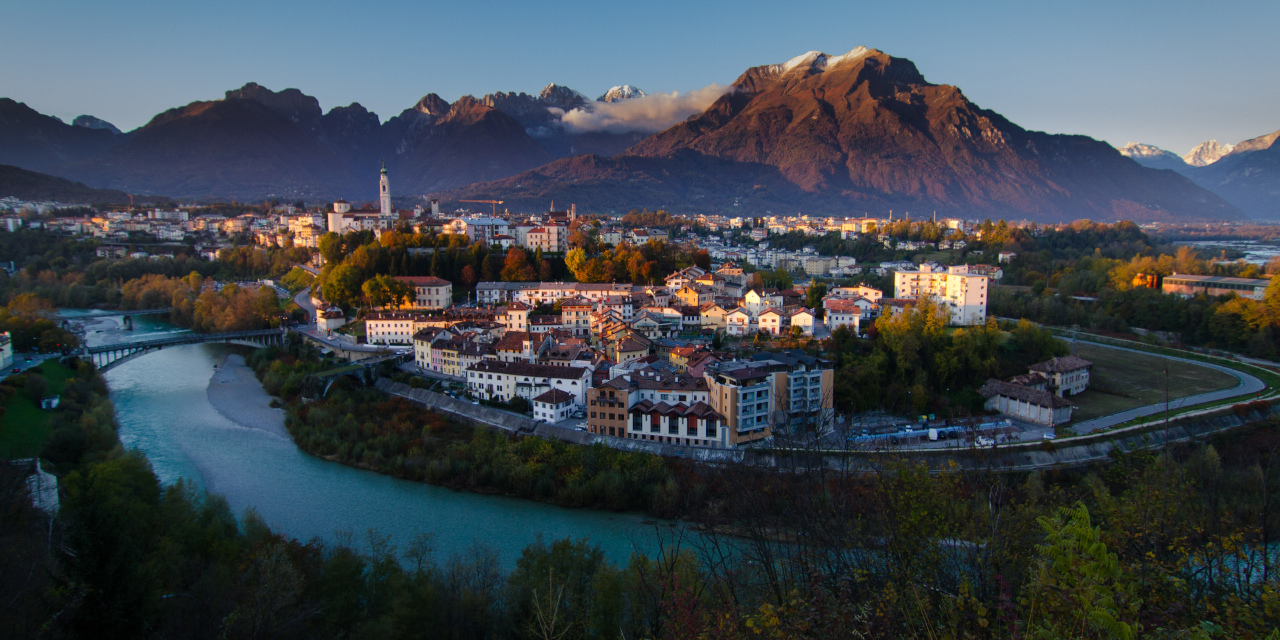
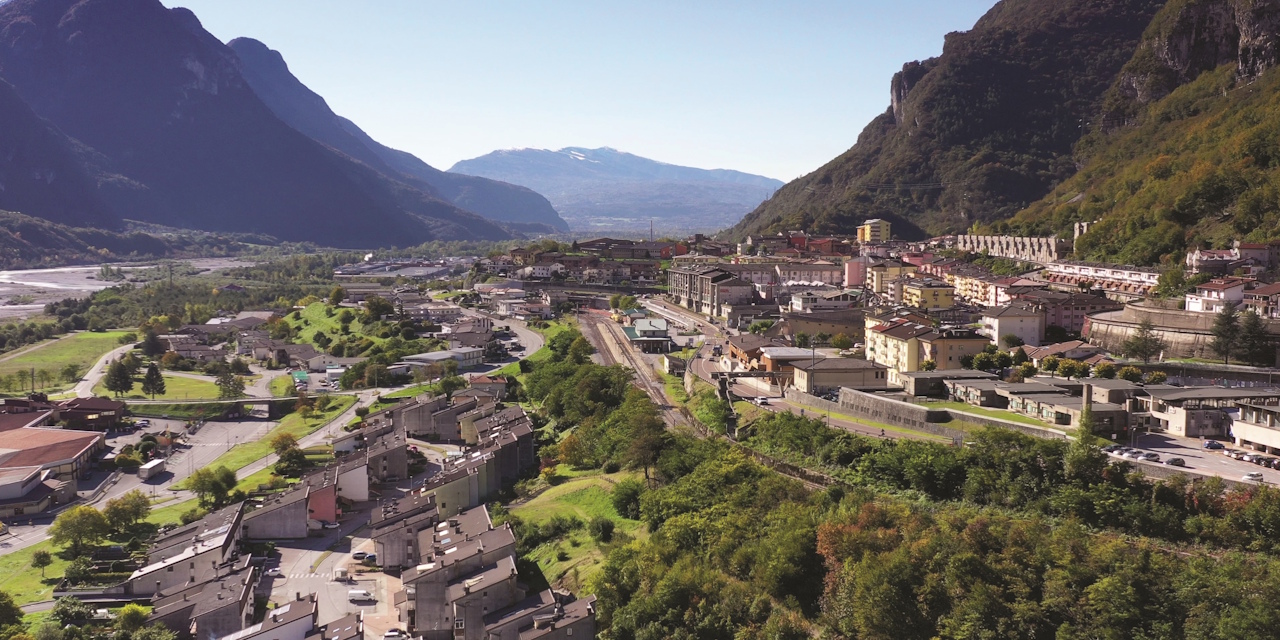
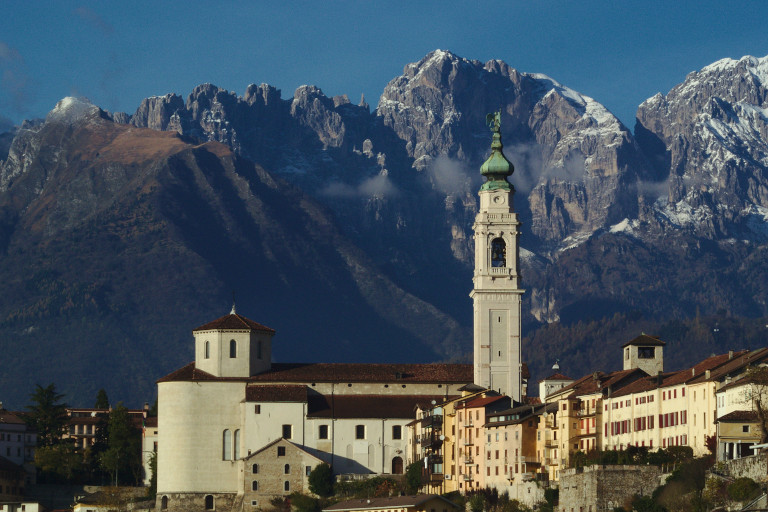
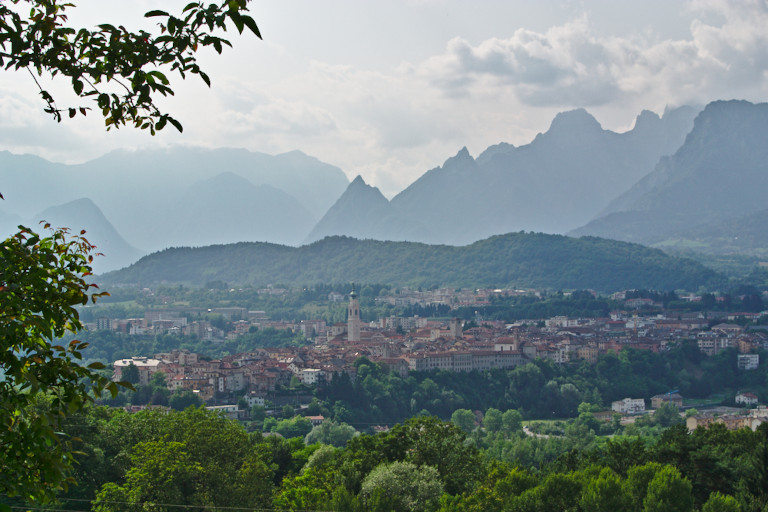
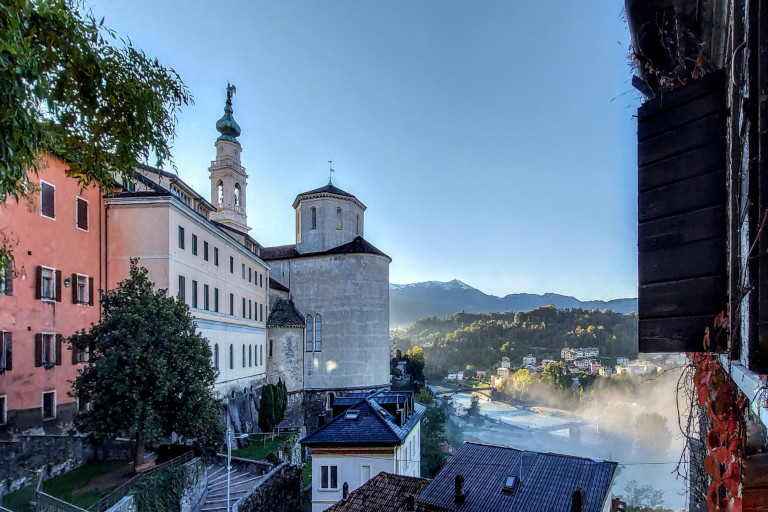
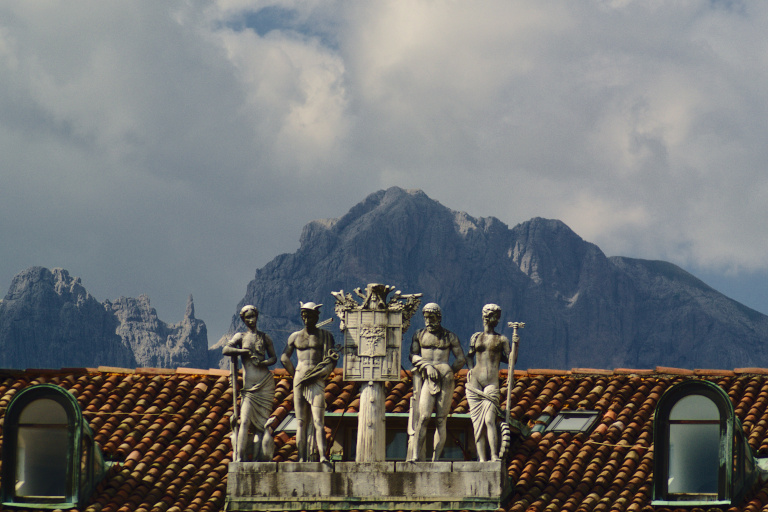
Belluno, the gateway to the Dolomites and at the same time a window onto the Veneto plain, is a small but precious gem nestled within a magnificent ring of mountains that encircle it on all sides: to the south lie the gentle slopes of the Nevegal Pre-Alps, and to the north the imposing Mount Serva and the rocky faces of the Schiara range: the magnificent Belluno Dolomites have been recognised as a UNESCO World Heritage Site.
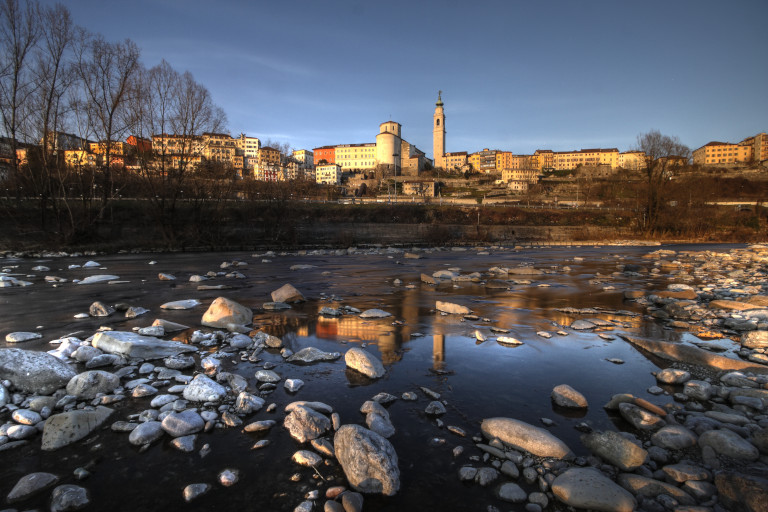
Its cosy and welcoming historic centre, bordered by the River Piave and the Ardo stream, is the calling card of this people-friendly town, which offers its visitors a wealth of artistic and natural treasures within a prestigious urban setting, surrounded by a rural area dotted with small villages of considerable scenic interest. It is no coincidence, in fact, that it is the only provincial capital to include the boundaries of a national park within its municipal territory: the Belluno Dolomites National Park. Confirming Belluno’s naturalistic vocation are the repeated accolades from Legambiente, which since 2007 has consistently ranked it at the top among Italian provincial capitals for environmental quality.
A place, to quote the Belluno-born writer Dino Buzzati, that possesses a special character which lends it an extraordinary charm, though few actually notice it; a place where the world of Venice (with its serenity, the classical harmony of its lines, its ancient refinement, the hallmark of its unmistakable architecture) and the world of the North (with its mysterious mountains, long winters, fairy tales, the spirits of caves and forests, that indescribable sense of remoteness, solitude and legend).
Belluno is a city to be experienced and explored, boasting an ancient historic centre, a ring of mountains, the River Piave running through it, palaces characterised by early 20th-century architecture, monuments, numerous fountains and the splendid Civic Museum. To fully appreciate the historic centre, Belluno offers five themed walks that allow visitors to discover the city’s beauty in a focused way, with three routes covering the central historic core and two others extending the visit from the very heart of the city to the nearby River Piave and the blocks characterised by early 20th-century architecture.
Food
Pastin
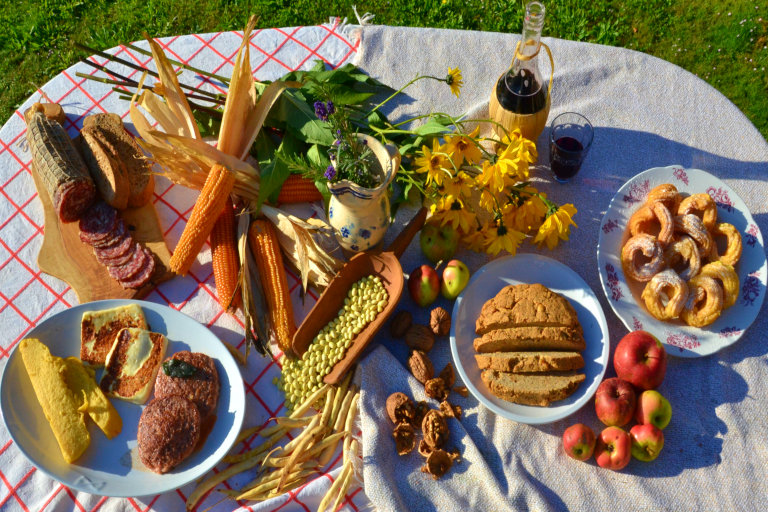
Pastin is one of the most authentic delicacies of Belluno’s culinary heritage, consisting of a mixture of minced meat – usually pork and beef – skilfully seasoned according to ancient local recipes. This dish is distinguished by its distinctive seasoning, known in the trade as ‘concia’, which involves the use of salt, pepper, garlic and a blend of spices such as cinnamon and cloves – ingredients that give the product a bold and unmistakable flavour profile. Historically linked to the tradition of high-altitude pork butchery, pastin was originally eaten raw to check the correct salting of cured meats before curing, whilst today it finds its culinary peak when cooked on a griddle or barbecue. Included in the list of Traditional Agri-Food Products (P.A.T.), it is usually served with sputio corn polenta or in sandwiches during local festivals, representing a fundamental part of the cultural identity and conviviality of the Dolomite valleys.
Schiz
Alongside pastin, Schiz forms the cornerstone of Belluno’s rustic cuisine, standing out as a fresh cheese with a unique texture and roots deeply intertwined with life on the mountain pastures. Originating in the mountain pastures of the Dolomites as a by-product of cheese production intended for maturing, Schiz owes its curious name to the ‘splashes’ of curd that spilled out of the moulds during pressing, which were collected by the herdsmen for immediate, domestic consumption. It is a fresh, unsalted and unripened curd, made from whole cow’s milk, with a white, elastic texture and a very delicate flavour, strongly reminiscent of the taste of freshly milked milk. Unlike most cheeses, Schiz only reveals the best of its flavour profile after being cooked: the traditional method involves cutting it into thick slices and browning them in a pan with butter, single cream or a dash of milk, until the surface turns golden and the texture is pleasantly soft but not completely melted. Always served with yellow polenta and often accompanied by pastin, this cheese embodies the simplicity and ingenuity of the local cheese-making tradition, elevating a humble product to an undisputed symbol of the gastronomic identity of the province of Belluno.
Pan de Belùn
Pan de Belùn epitomises contemporary Belluno confectionery, a dessert created with the specific aim of encapsulating the most characteristic flavours of the Dolomite valleys in a single dough. This speciality is distinguished by a rustic, fragrant base made from cornflour, which gives the product a grainy texture and a golden colour, evoking the local grain-growing tradition. The aroma and complexity of the dessert are enhanced by the generous addition of walnuts and hazelnuts, ingredients historically linked to the mountain economy, which, together with chocolate chips, create a combination of crunchiness and indulgence. The distinctive feature that defines the visual and gustatory identity of Pan de Belùn, however, is the presence of poppy seeds, which dot the dough and evoke ancient high-altitude crops, imparting a subtle and characteristic aromatic note.
Giuseppine
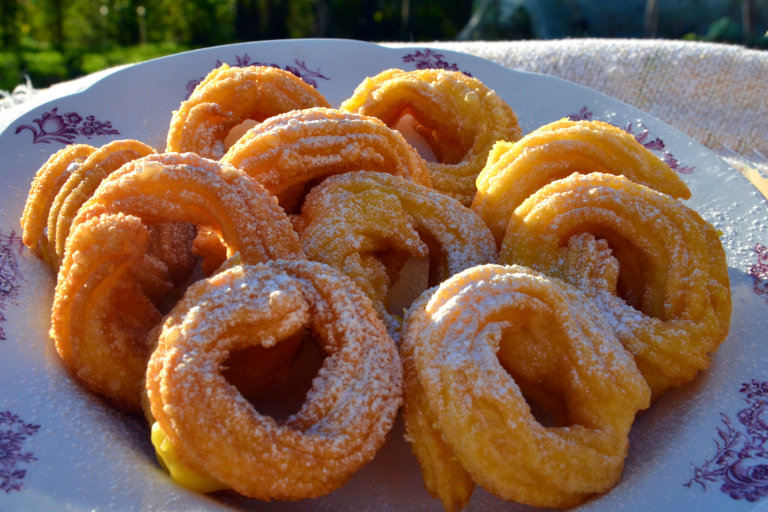
The Giuseppina is the sweet symbol of the carnival in Belluno, and is not merely associated with the feast of St Joseph. It is a local and refined variation on the choux pastry, distinguished by its light texture and rich filling, elevating what appears to be a simple recipe to the status of an emblem of the town’s pastry-making tradition. Made from choux pastry (pâte à choux) which is traditionally deep-fried, though nowadays it is often also found in a baked version for a lighter texture, the Giuseppina is filled with a generous helping of velvety custard. The surface is usually finished with a dusting of icing sugar.
Points of interest
Piazza Duomo + Cathedral of St. Martin + Baptistery + Bell Tower
Cathedral of St. Martin – An early sacred building, probably from the Paleochristian period, was dedicated to St. Martin of Tours by Bishop Felice of Belluno in 548, during the Gothic wars. On the façade are fragments of plutei and small pillars dating back to the 9th and 10th centuries, discovered beneath the forecourt. Of the 14th-century altars, two remain: the so-called Azzoni ark, now embedded inside the bell tower, and the Avoscano ark, which today serves as the altar table in the crypt.
In 1471, an accidental fire forced the rebuilding of the cathedral, which previously faced the Piave River. The new structure was erected starting in 1517, based on a design by Tullio Lombardo, and was gradually enriched throughout the 17th and 18th centuries by successive bishops.
The Cathedral Bell Tower – Designed by the renowned architect Filippo Juvarra (1678–1736). The idea was proposed by Bishop Gaetano Zuanelli on November 11, 1731, during the feast of St. Martin. He remarked that the cathedral was beautiful but lacked a bell tower. Juvarra reworked an earlier design, refining and adapting it, using the bell tower of Turin Cathedral as a model. Construction began on June 8, 1732, and by 1735 had reached the bell chamber. Juvarra died that same year, followed shortly by Bishop Zuanelli in early 1736. The tower was completed on July 16, 1743, under Bishop Domenico Condulmer. The angel atop the dome was sculpted by Andrea Brustolon. Local stone from Belvedere and Castellavazzo was used.
Baptistery – Built in 1516 on the foundations of a previous church dedicated to St. Martin. After the demolition of the old baptistery in 1555, it assumed its role. The 1873 earthquake destroyed the nearby church of St. Andrew, from which the 14th-century Madonna delle Grazie originates. Inside, above the baptismal font, is a statue of St. John the Baptist by Andrea Brustolon.
Palazzo dei Rettori + Civic Tower
Palazzo dei Rettori (Prefecture) – For nearly four centuries, this was the seat of Venetian governors. Built on a previous fortified structure (from 1409, burned in 1802), it was expanded in 1491 with a Lombard-style loggia. Further enlargements were completed in 1536. The clock tower was built between 1536 and 1547. The façade features coats of arms and busts of Venetian rectors. Despite restorations, many interiors retain their original appearance. Today it houses the Prefecture.
Civic Tower – Held the bell that summoned the city council since 1403. Originally part of a larger complex with multiple towers, it was modified over time. Heavily damaged in the 1873 earthquake, it was rebuilt and further restored after another earthquake in 1936.
Palazzo Rosso
Belluno’s Town Hall, known as “Palazzo Rosso” due to its red exterior, was built by architect Giuseppe Segusini between 1834 and 1838, expanding a 16th-century building. Inside, the council hall features neoclassical frescoes by Giovanni De Min depicting medieval events, alongside portraits by Pietro Paoletti. Adjacent is the former courthouse, now municipal offices, originally a 15th-century building adapted during the 19th century. Decorative elements and fragments of frescoes by Jacopo da Montagnana and Pomponio Amalteo are preserved in the Civic Museum at Palazzo Fulcis.
Piazza dei Martiri + Theatre
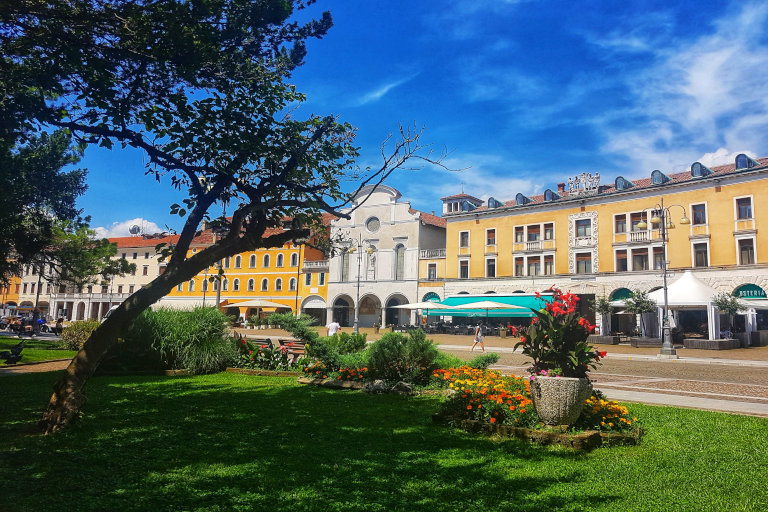
Piazza dei Martiri – The “living room” of Belluno, a scenic square lined with elegant buildings and a promenade. Formerly called Campitello, it was used for markets and events. Renamed in 1945 to honor four partisans executed there during World War II.
The square features a large circular fountain displaying the coats of arms of 69 municipalities, and a monument to the Resistance by Augusto Murer. Nearby gardens date back to the 1930s and include bronze panels depicting scenes from the Resistance.
Municipal Theatre – Built in neoclassical style between 1833 and 1835 by Giuseppe Segusini, replacing an older grain warehouse. The façade resembles other theatres designed by Segusini in Veneto and Austria. The entrance staircase features sculptures by Pietro Zandomeneghi. The interior was renovated in 1866, 1948, and 1993.
Civic Museum – Palazzo Fulcis
Palazzo Fulcis – A noble residence renovated around 1776 by architect Valentino Alpago-Novello. Today it houses the Civic Museum’s art collection. The museum spans five floors and 24 rooms, showcasing works from the 14th to the 19th century, including paintings, sculptures, decorative arts, and collections of jewelry and porcelain. Highlights include works by Sebastiano Ricci, Andrea Brustolon, and Ippolito Caffi. Restored with support from Fondazione Cariverona, it replaced the former museum location in Piazza Duomo.
Piazza Castello
The ruins overlooking the Piave River date back to a castle built between 980 and 990 by Bishop Giovanni II Tassina. Once a major military stronghold, it declined after conflicts between Venice and the Holy Roman Empire in the early 16th century. By the 20th century, little remained, and the area was redeveloped, with a commemorative plaque marking the site.
Porta Dojona
Named after the nearby tower (“Dojon”), this gate formed part of a fortified complex. Its inner arch dates to 1289. Expanded in 1553 and covered in 1622, it still retains original wooden doors. The Venetian lion was removed in 1797 and replaced in the late 19th century. Recently restored.
Porta Rugo
The historic southern entrance from the Piave river port. Much of the fortifications were demolished in the early 1800s. The remaining Gothic arch dates to the late 13th century. The façade, unusually made of brick, was redesigned in 1622. The last restoration dates to 1902.
Ponte Zilli (“Pontet”) + Murals of the Raftsmen
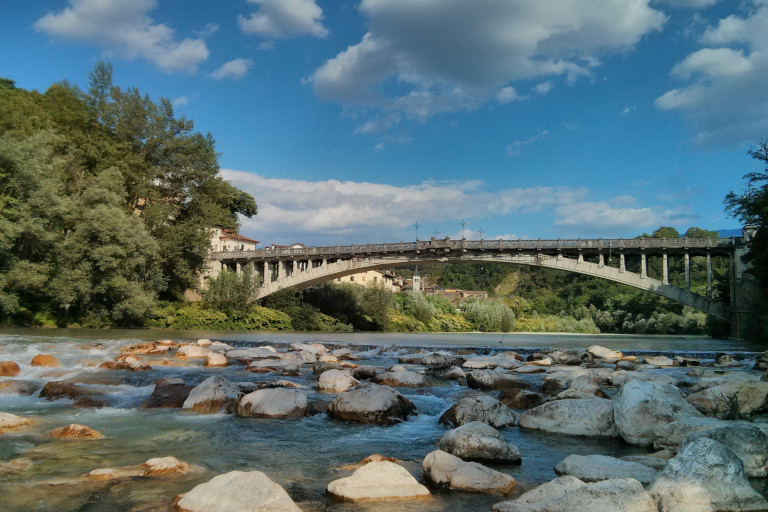
Belluno, whose name derives from the Celtic “Bellodunum” (“splendid city”), overlooks the Piave valley. The “Pontet” (Old Bridge) was built between 1837 and 1841 under Austrian rule. It connected the city to Borgo Piave, once a hub for timber raftsmen.
The bridge collapsed several times and was eventually replaced after World War I. Today, only one original arch remains. Along Via Uniera dei Zatér, murals by artist Marta Farina commemorate the raftsmen’s history and hard work. Nearby is the old port, once central to trade in the city.
Nevegal
Overview
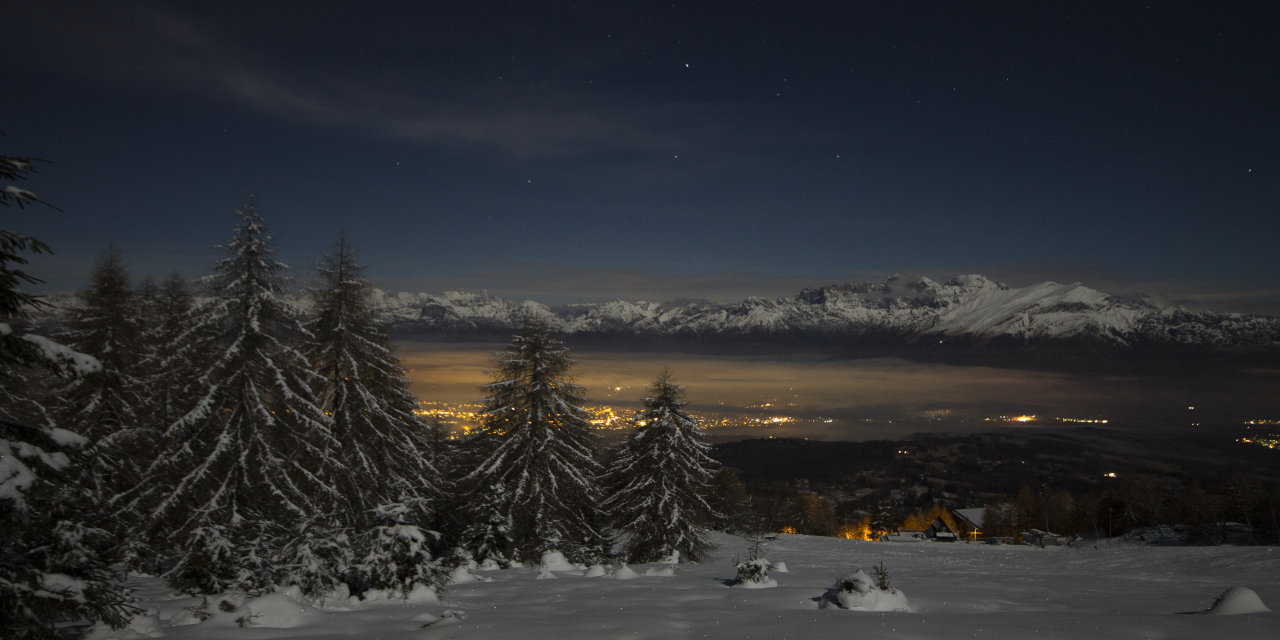
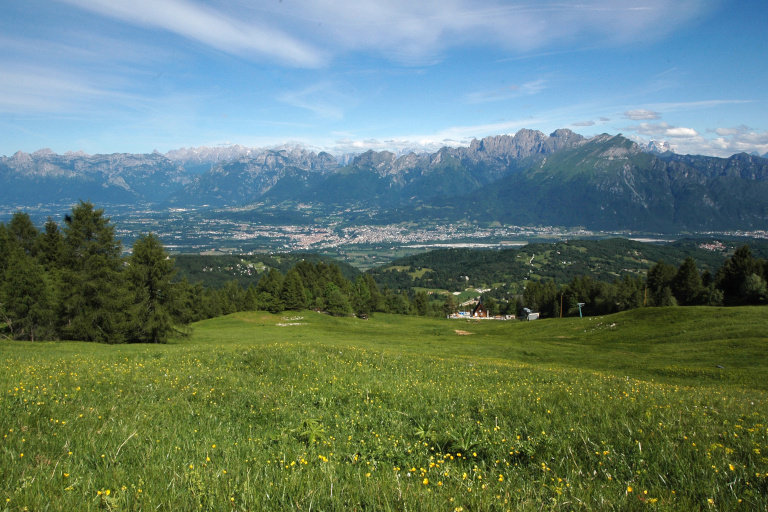
Nevegal: The Terrace over the Dolomites
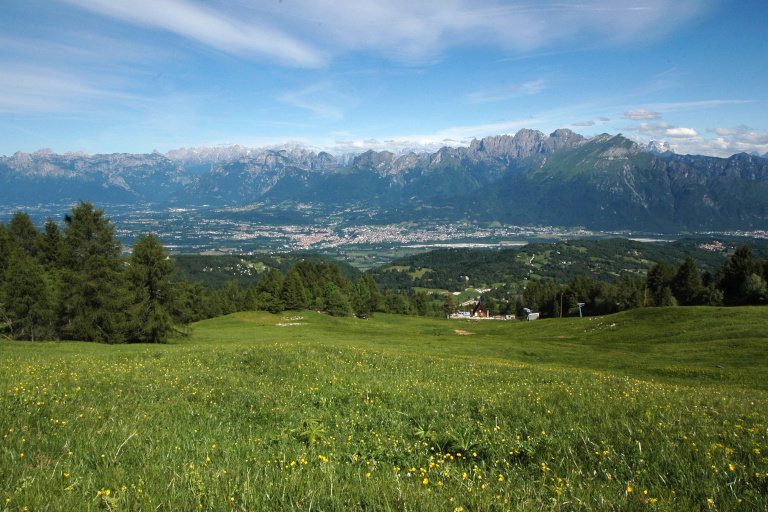
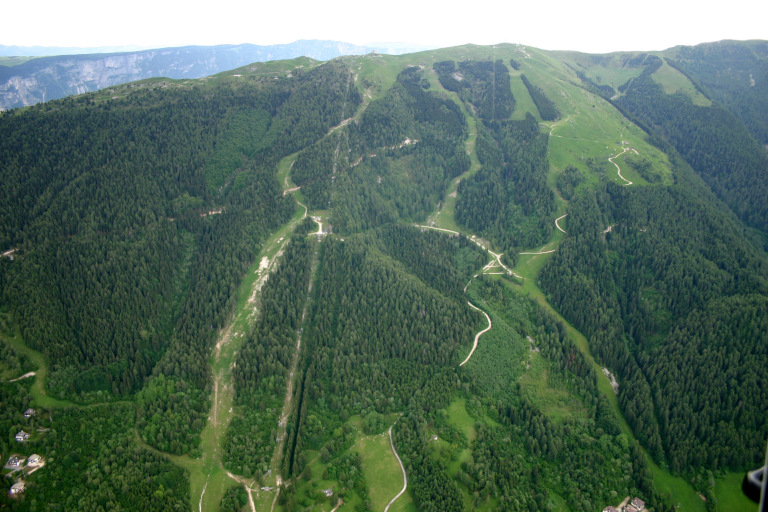
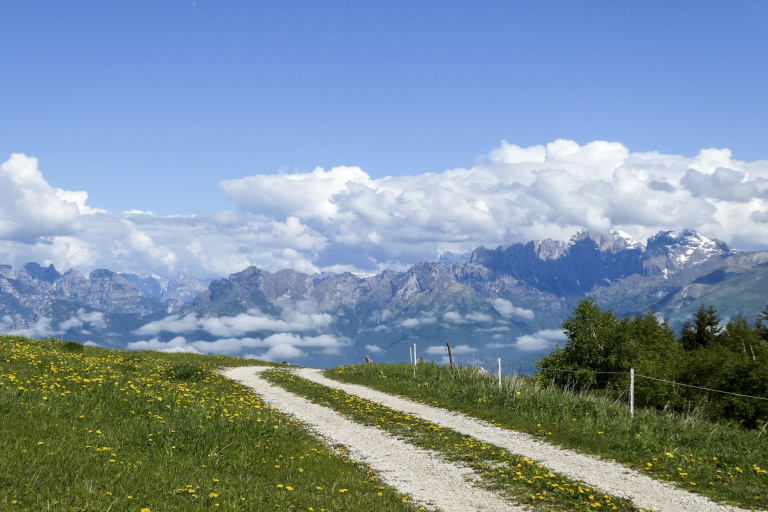
The Nevegal hill, also known as the “Terrace over the Dolomites” is a peaceful oasis located just a few minutes from Belluno. Ranging between 1,000 and 1,700 meters in altitude, it offers sports and activities all year round:
- Winter: Alpine skiing and night skiing.
- Summer: Trekking, mountain biking (MTB), and downhill racing.
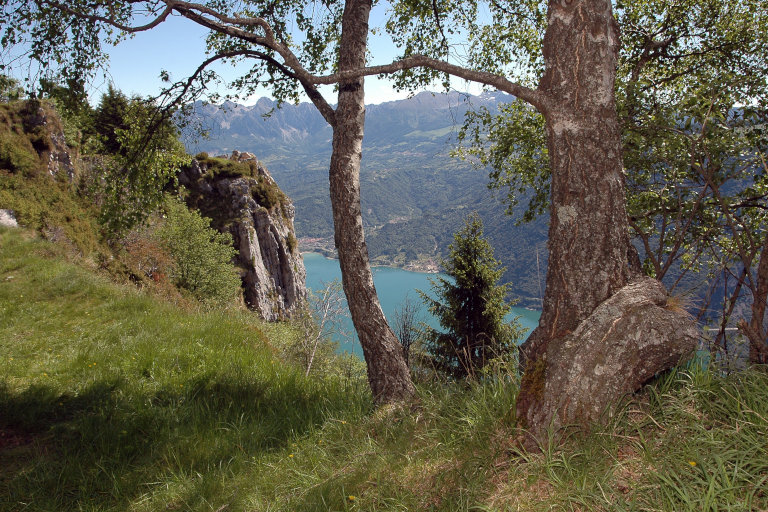
From its panoramic trails, visitors can admire breathtaking views of Lake Santa Croce and the majestic Belluno peaks. Ideal for both families and athletes, the area is home to the Botanical Garden of the Eastern Alps and the famous Sanctuary of Lourdes. It is the perfect blend of nature, outdoor adventure, and religious tourism.
Points of interest
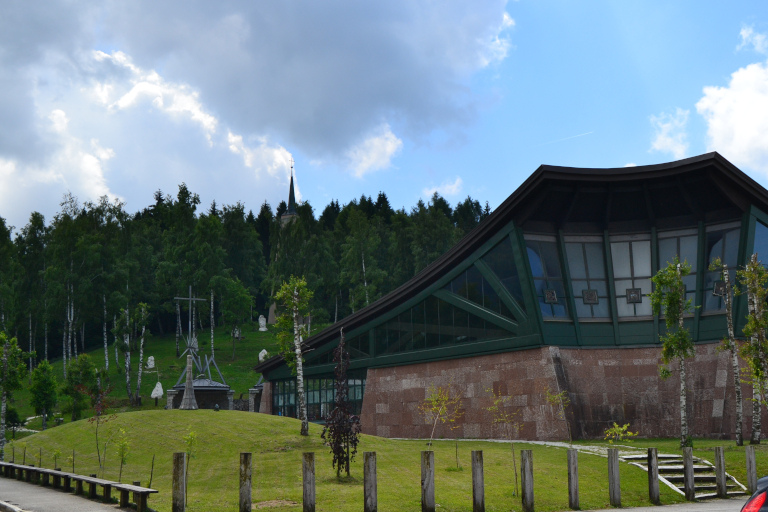
1) Sanctuary of Mary Immaculate, Our Lady of Lourdes
The Sanctuary of Mary Immaculate Our Lady of Lourdes welcomes pilgrims with a vibrant and profound liturgical life. Key highlights of the site include:
The Modern Lourdes Grotto: featuring a statue blessed by Pope John Paul II.
The Rosary Mosaics: 20 stunning works created by the renowned Spilimbergo Mosaic School.
The Church: its unique architectural form evokes Mary’s mantle, and it houses a historic organ dating back to 1765.
The entire complex, which includes the Via Crucis and the Chapel of Reconciliation, is designed as a journey of faith. It converges toward the altar, the symbol of Christ, offering a perfect blend of art, prayer, and silence.
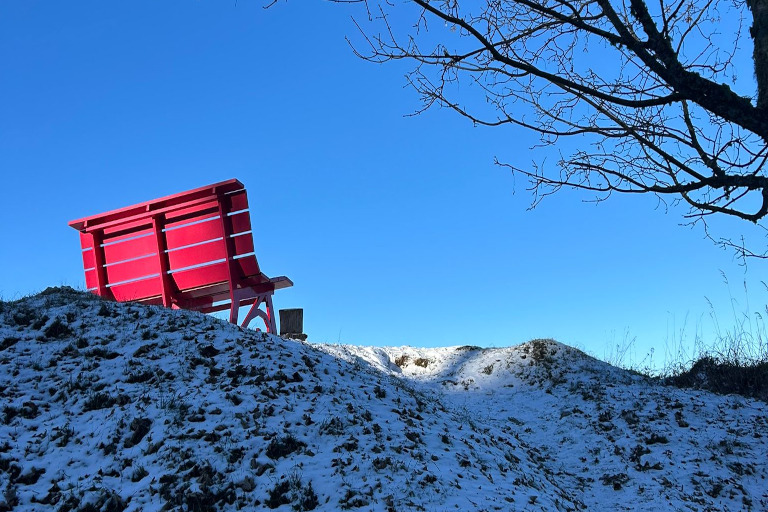
2) The Big Bench
Perched at 1,377m, this vibrant red Big Bench offers breathtaking views over the Valbelluna. It is officially No. 46 of the “Big Bench Community Project” (started in 2010) and is located in the Nevegal area.
To get there, follow the “Nuova forestale” road from the Faverghera area (starting near *La Casera* restaurant) toward Casera Erte: an easy walk taking ess than an hour. Nearby, you can also admire the sculptures by artist Luigino Saviane.
It is the perfect experience to unwind, feel like a child again, and soak in the majestic panoramas of the Belluno peaks.
3) The Botanical Garden of the Eastern Alps
Located on Mount Faverghera (between 1,400m and 1,600m), this 6.25-hectare reserve is managed by the Carabinieri Biodiversity Department. A true sanctuary of Alpine nature, the garden features.
Videos Stage 04

Giro d'Italia Women 2026 | Stage 4 | Highlights 🇬🇧
2 Jun 2026
Giro d'Italia Women 2026 | Stage 4 | Last KM 🇬🇧
2 Jun 2026
Giro d'Italia Women 2026 | Stage 4 | Giro Express
2 Jun 2026Photos Stage 04
Giro d’Italia Women 2026 | Stage 4 | Best of
02/06/2026
Giro d’Italia Women 2025 | Stage 4 | Best of
09/07/2025