






learn more
technical info
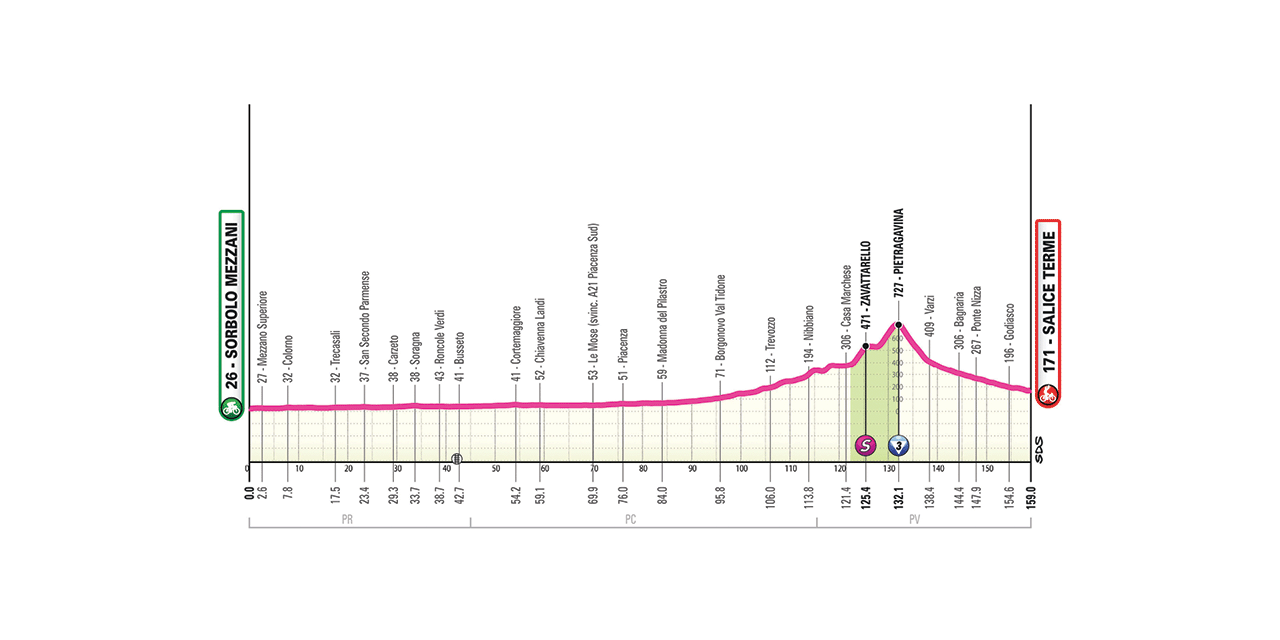
profile
map
technical info
Route
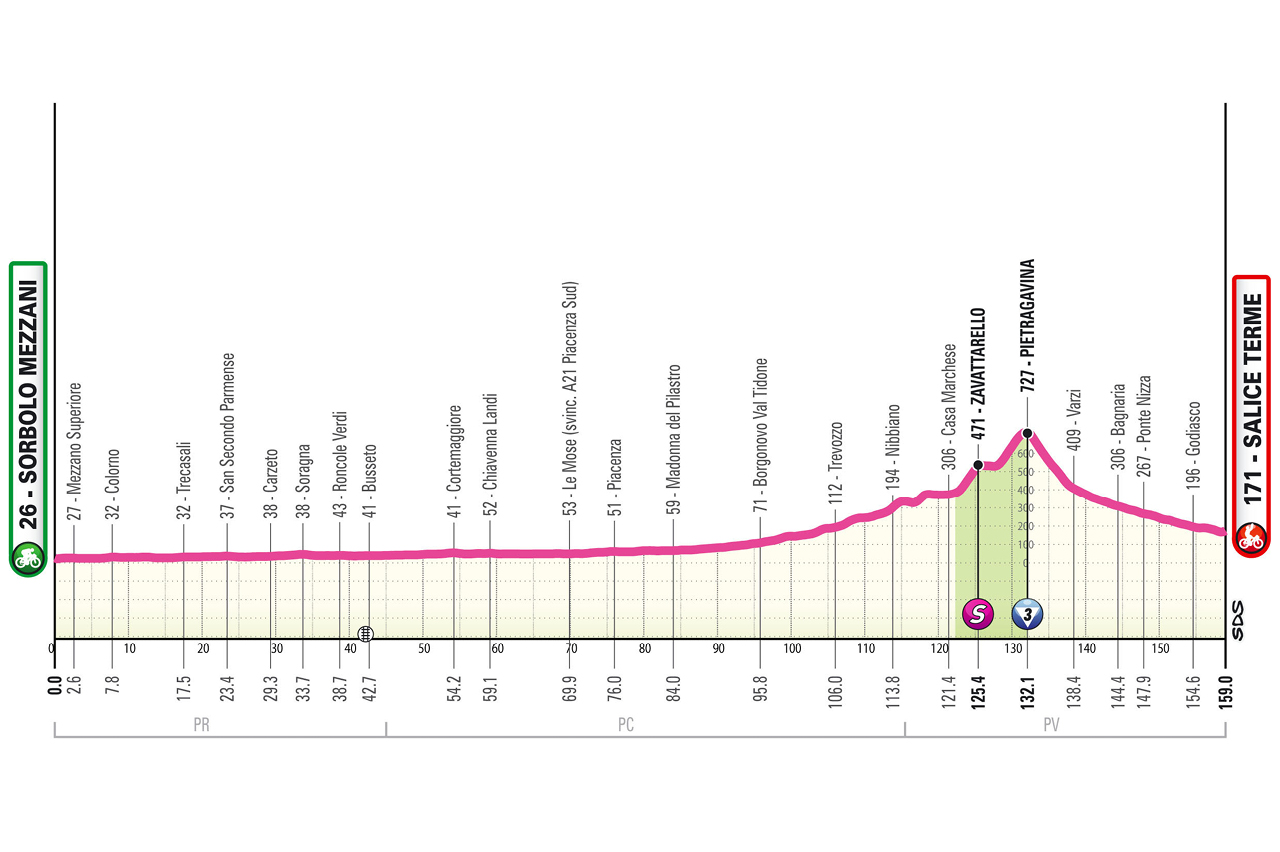
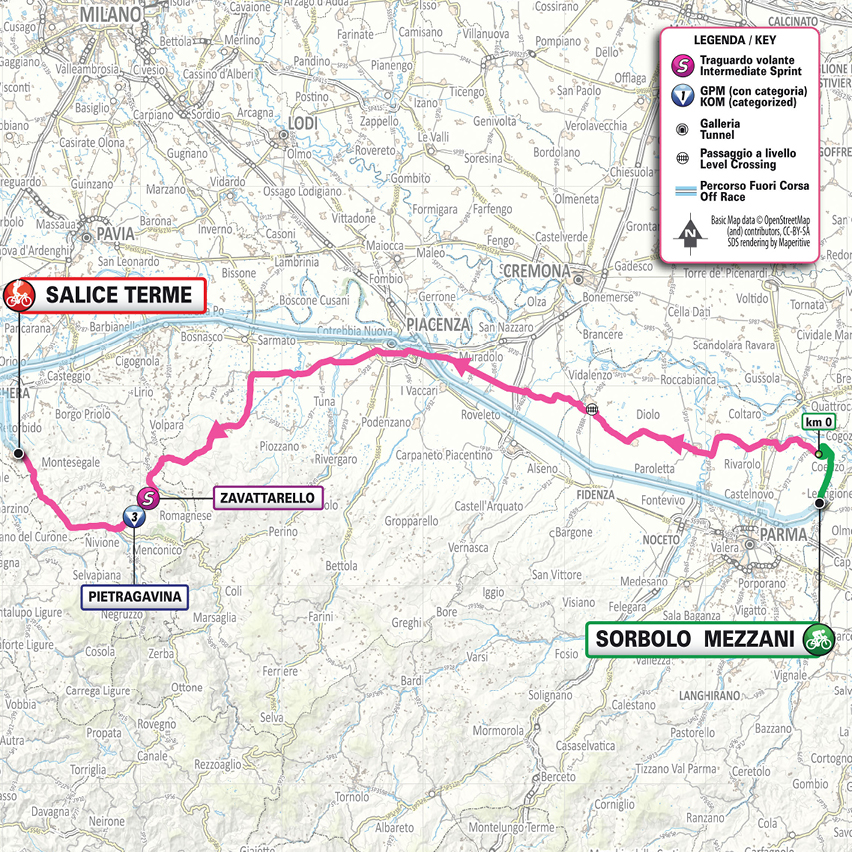
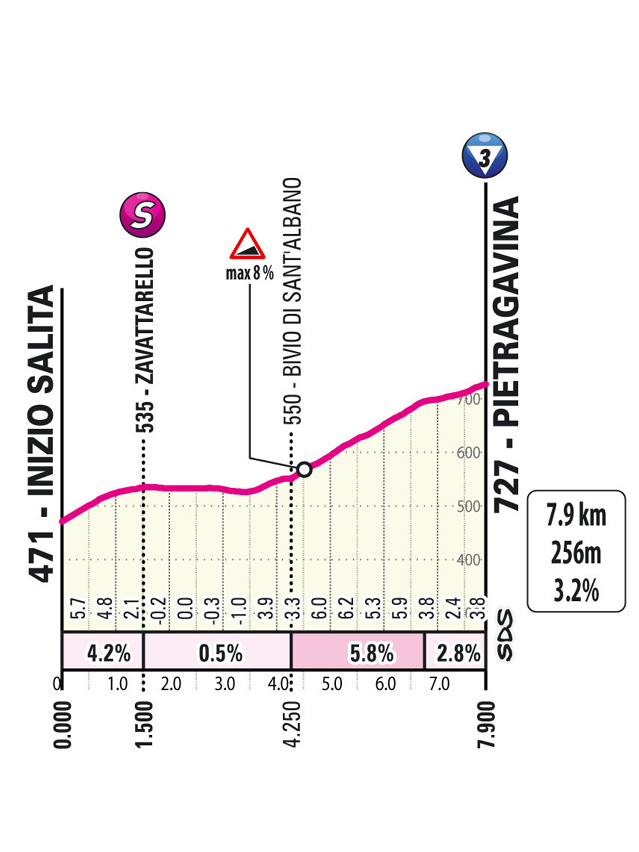
An Apennine stage divided into two parts. The opening section crosses the Po Valley towards Piacenza, before moving into the Oltrepò hills, with the summit crossing at Pietragavina.
Final kilometers
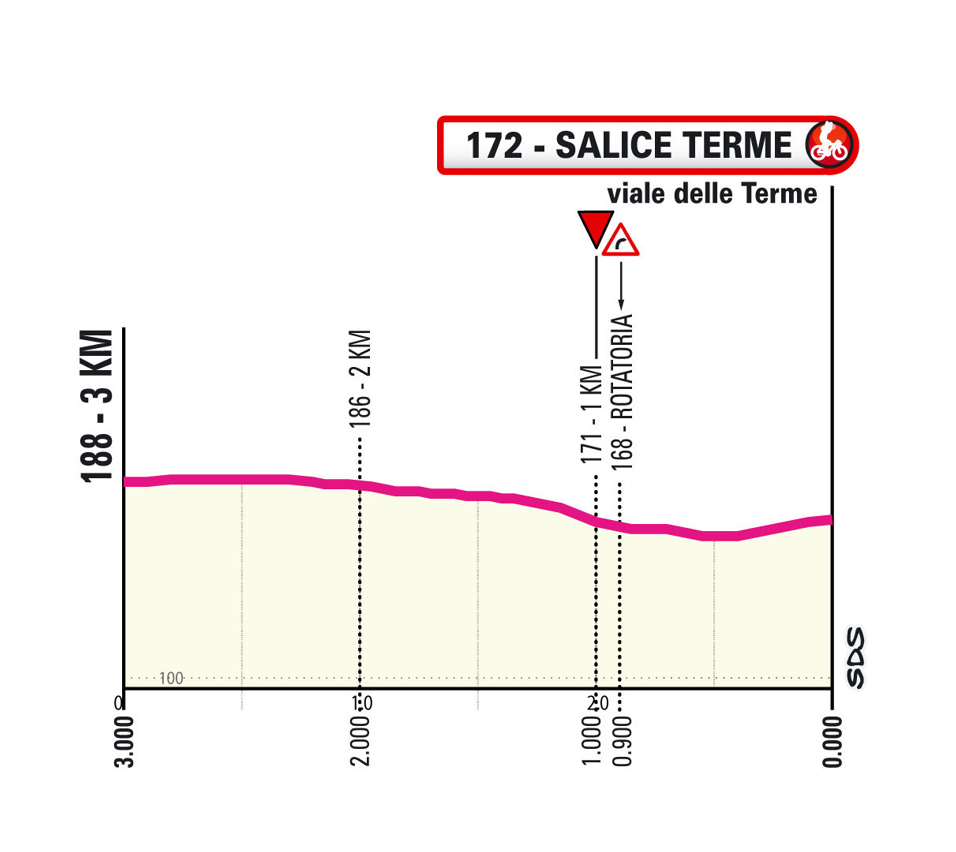
The final kilometres are slightly downhill or flat. Worth noting are two corners in the final kilometre, the last of which comes 200 m from the finish. Road width: 8 m on asphalt.
start / finish
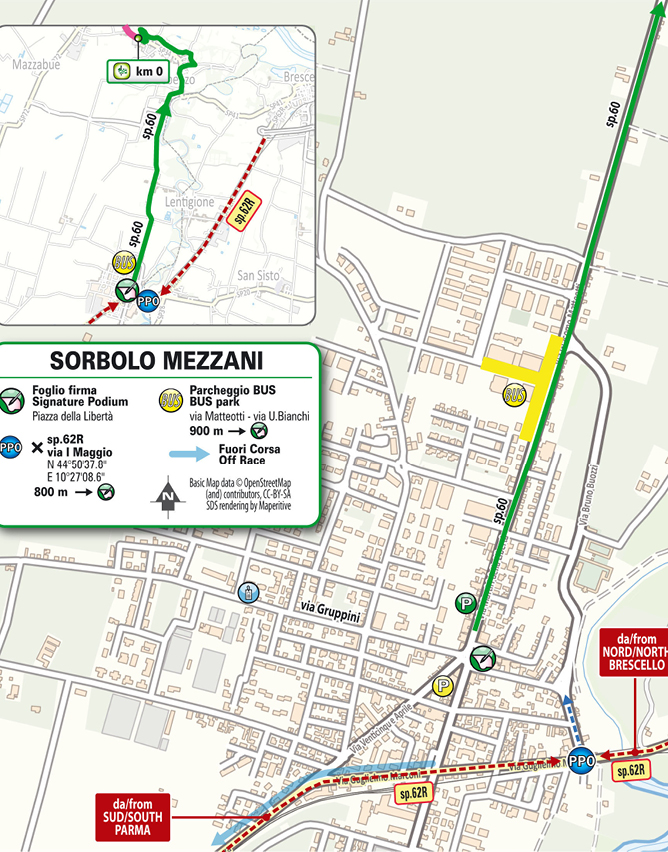
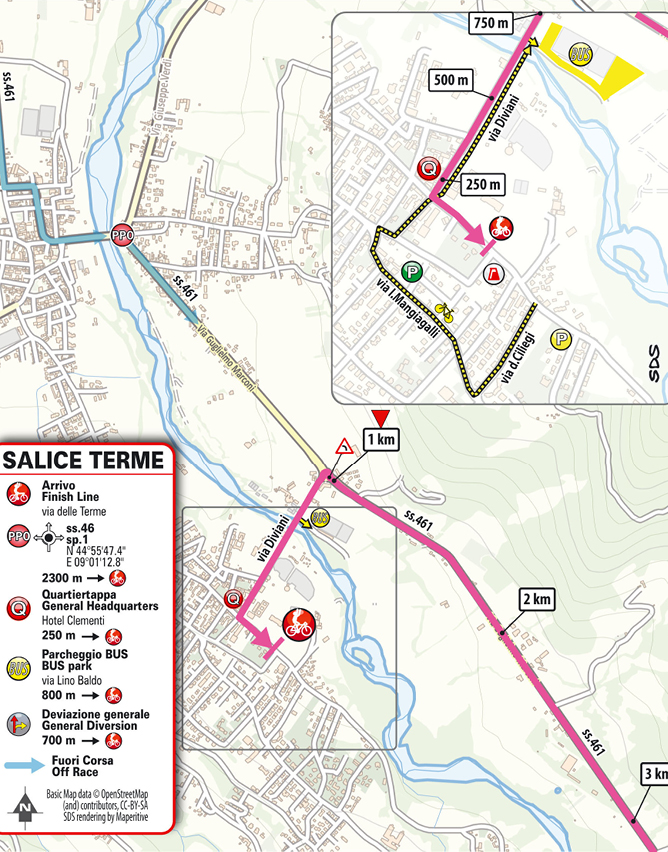
climb detail
final kilometres
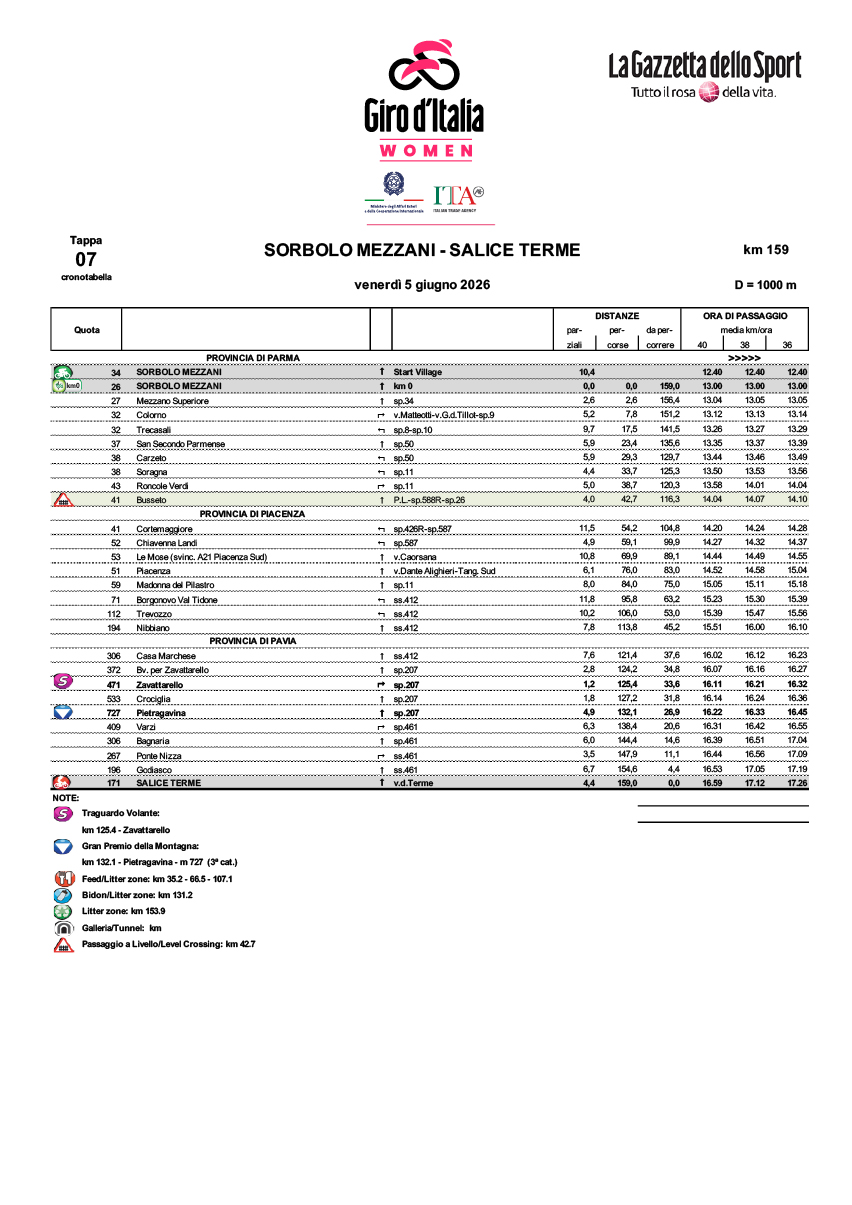
itinerary timetable
tourist info
Host city:
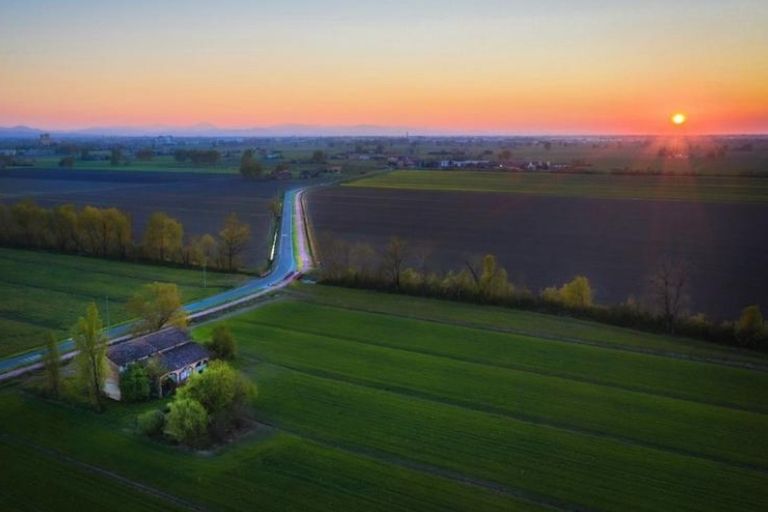
Sorbolo Mezzani
Overview
Food
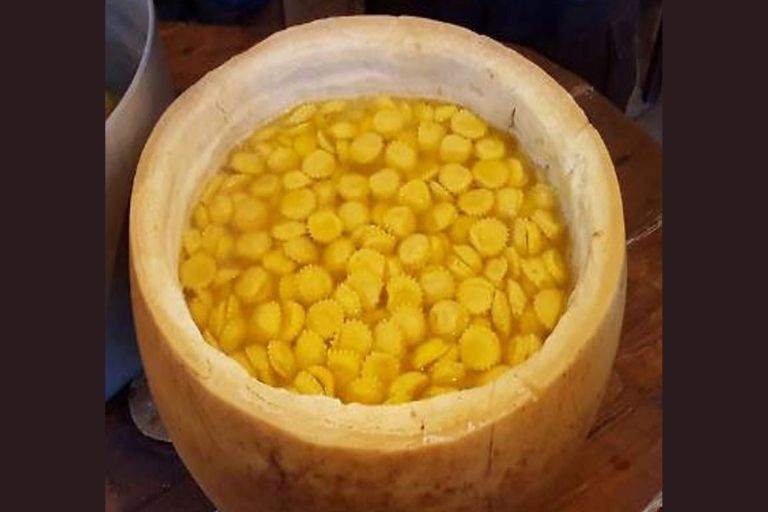
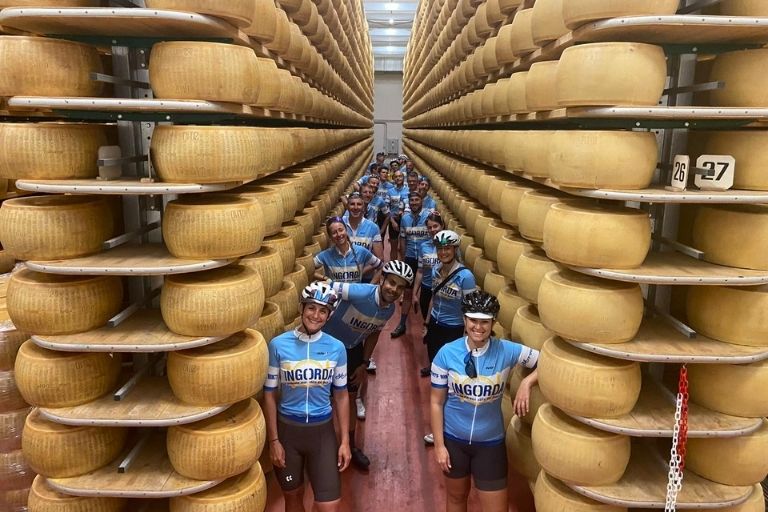
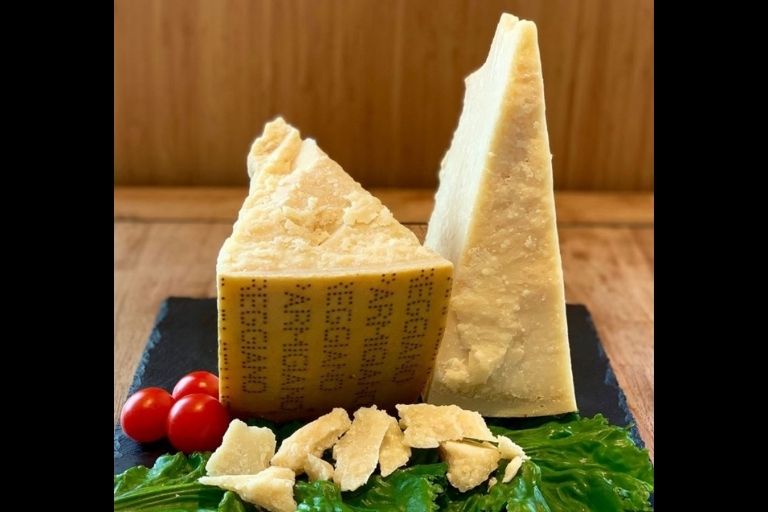
Parmigiano Reggiano
A PDO (Protected Designation of Origin) hard cheese, cooked and unpressed, made from raw cow’s milk produced by cattle mainly fed with local forage from the provinces of Parma and Reggio Emilia. The product stands out for its production method, unchanged for nine centuries and using the same ingredients – milk, rennet, and salt – without any additives.
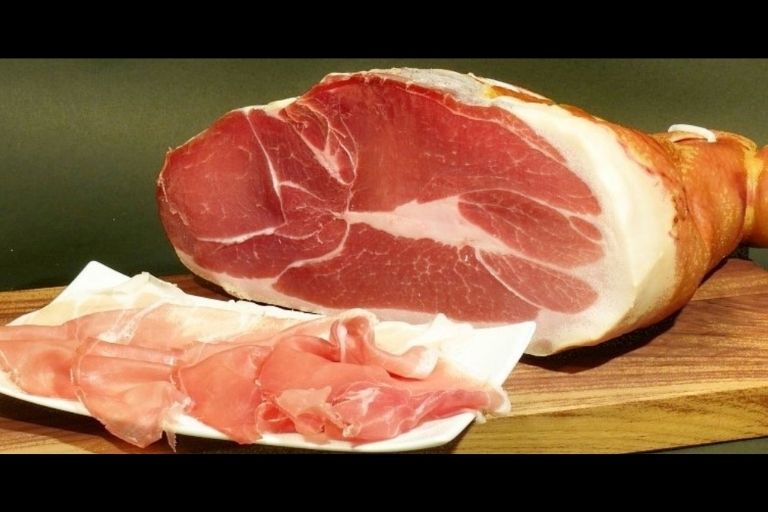
Prosciutto di Parma
A cured and aged raw ham produced in the province of Parma and obtained from the processing of fresh pork legs from breeds registered in the Italian Genealogical Register. The product is completely natural and is distinguished by the characteristic sweetness and flavor that develop during the aging process.
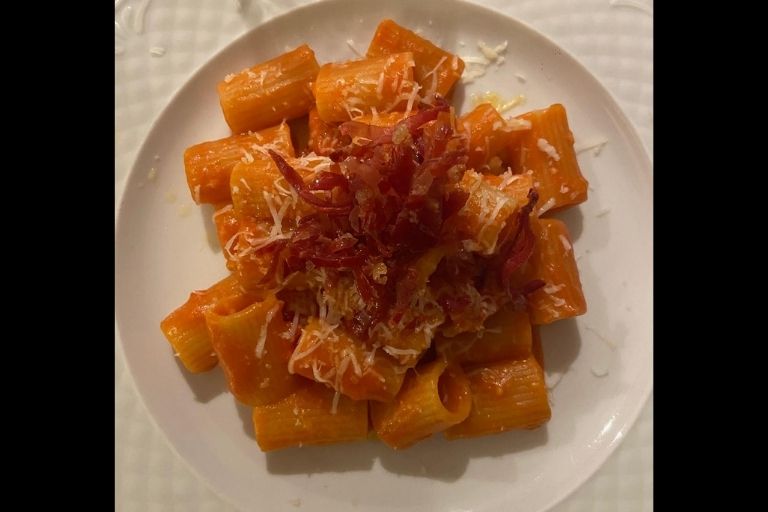
Pasta alla sorbolese
Traditionally served in a wide, shallow pan, this dish combines pasta – preferably short shapes such as mezzi rigatoni – with a sauce made exclusively from natural ingredients including tomatoes from the Parma countryside, grated Parmigiano Reggiano, thin strands of tosone cheese, butter, and fresh basil leaves.
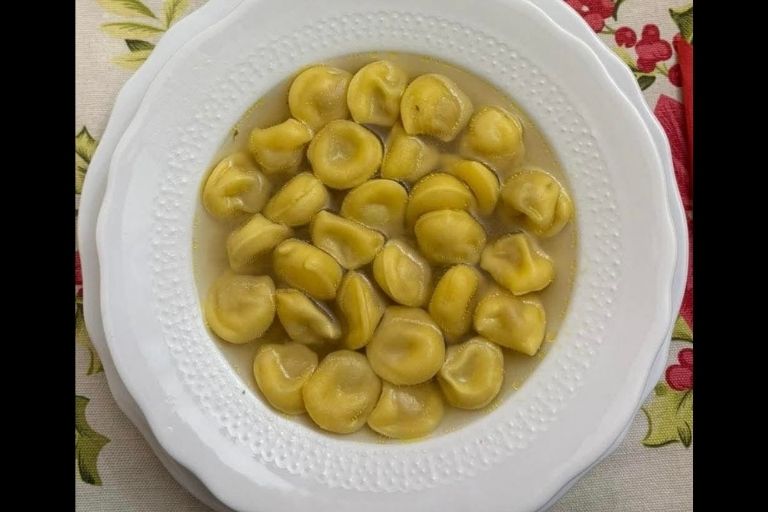
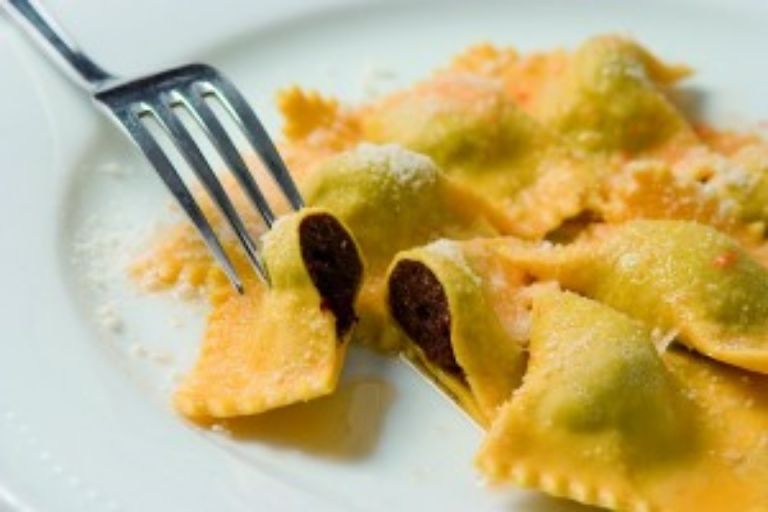
Anolini morbini in brodo
Small circular parcels of egg pasta filled with meat, eggs, and spices. They should not be confused with the typical Parmigian anolini, which instead contain a cheese-based filling rather than meat. In the historic recipe passed down by the inhabitants of Sorbolo Mezzani, there is also a secret ingredient originating from the lands along the Po River.
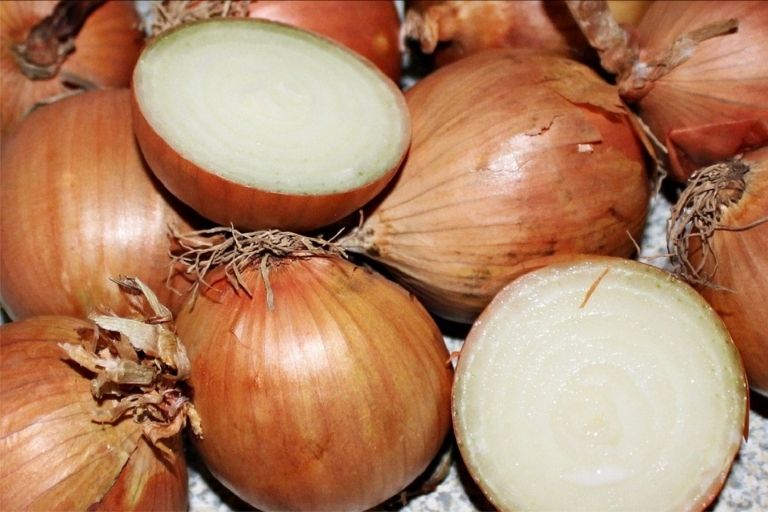
Cipolla dorata di Parma
A classic golden onion known for its distinctly sweet flavor and very early growing cycle. Its weight can vary between 300 and 450 grams. In seasons with limited rainfall the size may be smaller and the flavor slightly sharper. It is transplanted from autumn to early spring and harvested from late May to July. It stores well and is suitable for all culinary uses.
Tortél Dols (sweet tortello)
A typical dish from the Parma culinary tradition, particularly from the town of Colorno. It consists of fresh pasta filled with a distinctly sweet mixture made from noble pears, white watermelon, quince apples, lemon juice, sugar, mustard essence, breadcrumbs, and cooked grape must (obtained by slowly boiling grape juice). The dish is dressed with butter and grated Parmigiano Reggiano, with the optional addition of tomato sauce.
Wines
Lambrusco Fortana (Sweet Sparkling)
A sparkling wine that appears in the bottle or glass with a characteristic color ranging from bright ruby red to deep violet, with a lively and persistent foam. On the nose it offers a fruity and floral aromatic bouquet, with notes of cherry, strawberry, blueberry, and violet, accompanied by light spicy nuances. Perfect when paired with traditional dishes from the Emilia region.
Points of interest
Ciclovia della Food Valley Bike
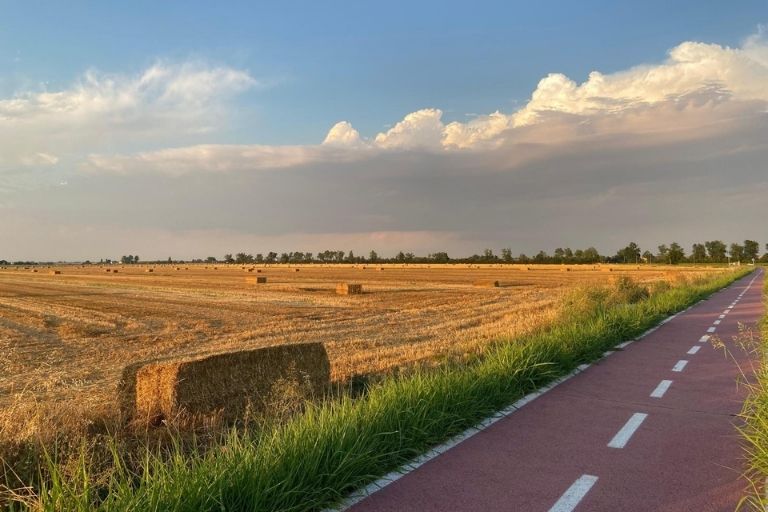
Developed along the scenic, artistic, and food-and-wine highlights of the Parma area, the Food Valley Bike cycle route connects Parma to Busseto with the aim of combining the promotion of tourism in the lowlands with the benefits of physical activity. The route encourages visitors to enjoy the territory while embracing a conscious and sustainable appreciation of the outstanding agri‑food products of the area that runs alongside the Po River.
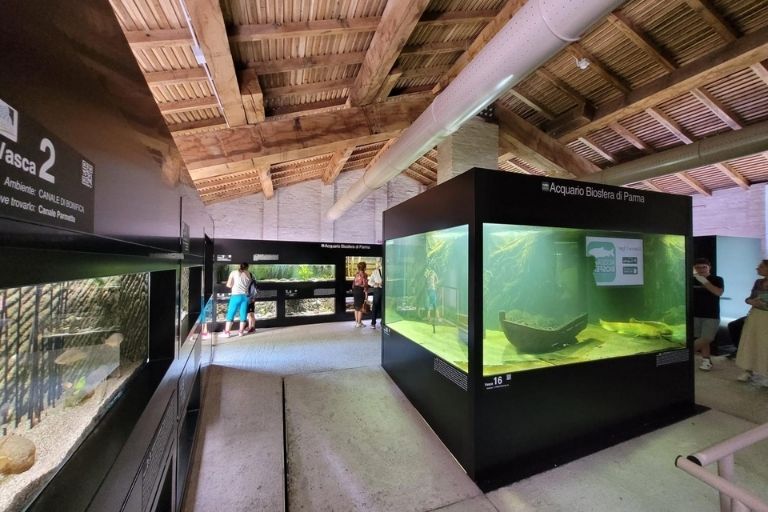
Acquario Biosfera di Mezzani
The educational aquarium of the Parma Morta Nature Reserve hosts hundreds of native fish and crustacean species such as carp, tench, sturgeon, catfish, and freshwater crayfish. The visitor route is located inside a traditional rural house typical of the Po River floodplain. The interior has been modernized and equipped with digital tools to offer an immersive learning experience for both adults and children.
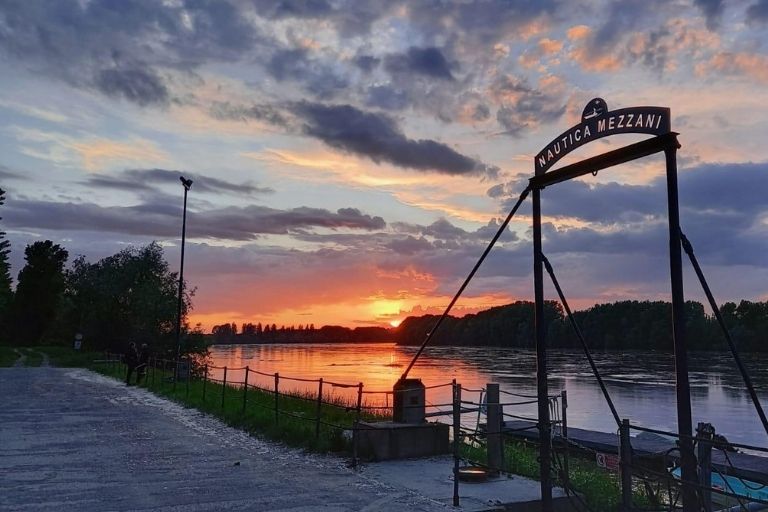
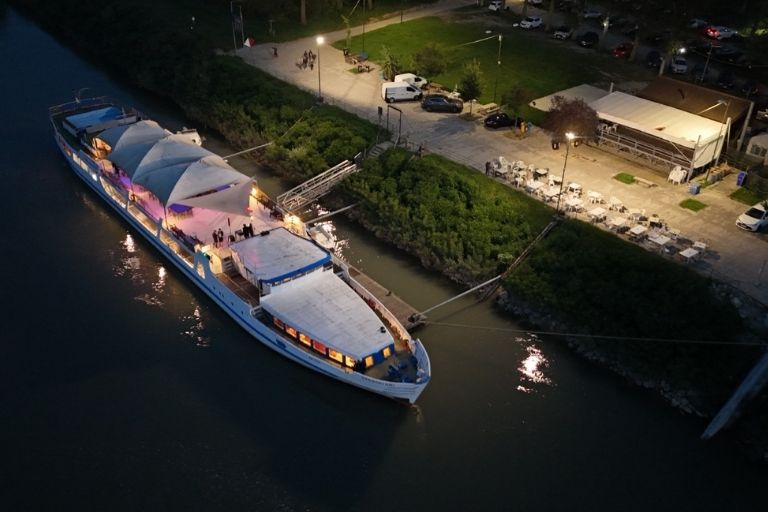
Porto turistico fluviale di Mezzani
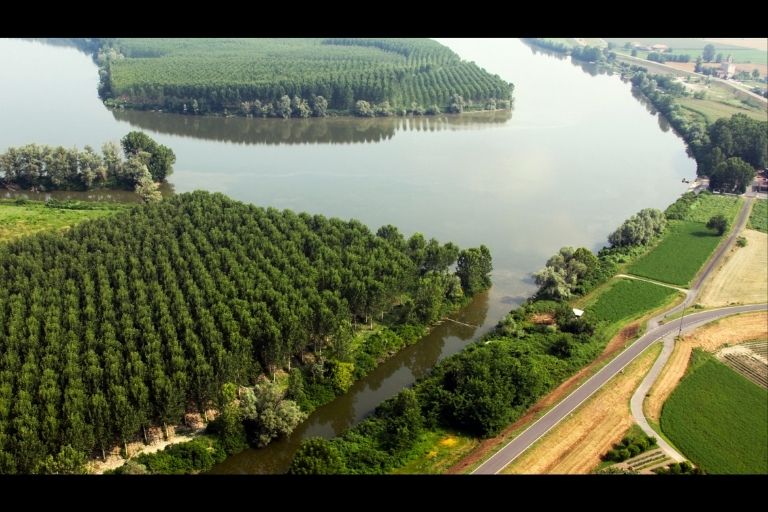
The Mezzani river tourist port is an ideal landing point for visitors wishing to immerse themselves in nature on the banks of the Po River. It features a welcoming and spacious green area equipped for outdoor excursions and physical activities. This infrastructure is of fundamental importance for navigation along the great river and enjoys a strategic position with moorings equipped for recreational boats. At sunrise and sunset it offers breathtaking displays of natural light.
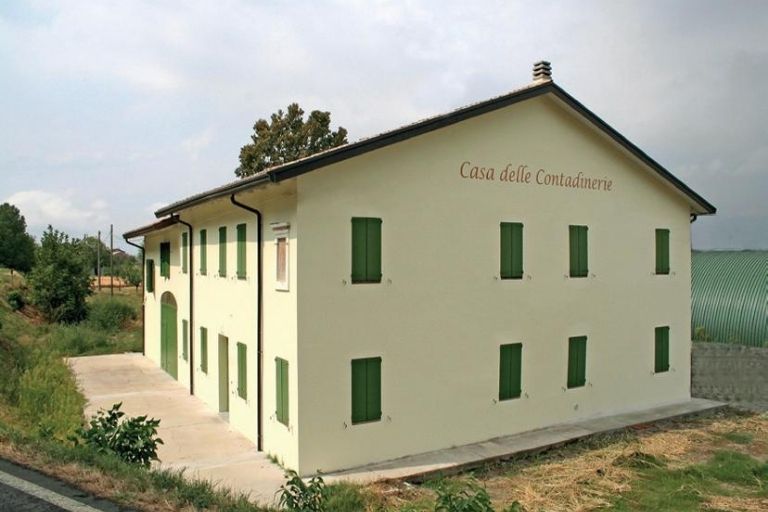
Museo etnografico delle culture contadine
Also known as the “House of Rural Traditions”, this museum is located in Coenzo, a hamlet of the municipality of Sorbolo Mezzani. It is an iconic place for anyone wishing to explore the rural culture of the past. Housed in a 19th‑century rural building, the museum allows younger generations to rediscover the traditions of their grandparents, including traditional clothing and the tools used in historical rural trades.
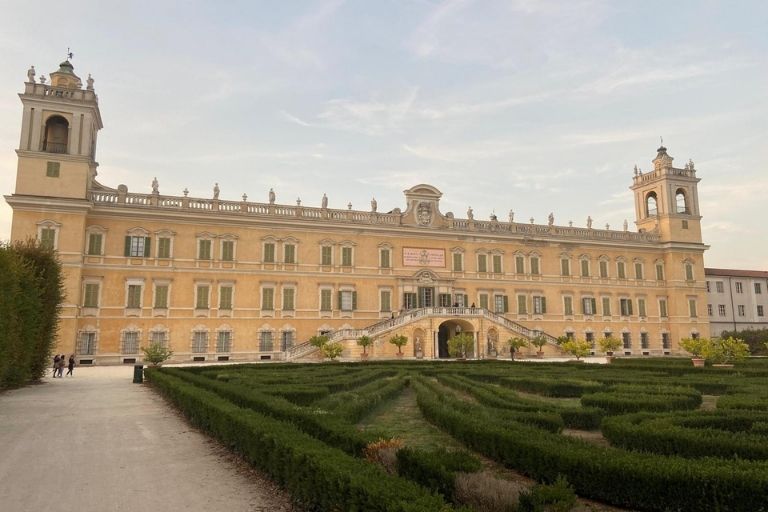
Reggia di Colorno
A grand and monumental architectural complex that once served as the summer residence of the Farnese and Bourbon dukes and of Marie Louise of Austria, Napoleon’s wife. Surrounded by a French‑style garden, the palace contains large ceremonial halls decorated with precious furnishings, stuccoes, and frescoes that display the centuries‑old luxury of the ducal court. Today it is frequently chosen as a venue for major events and live concerts.
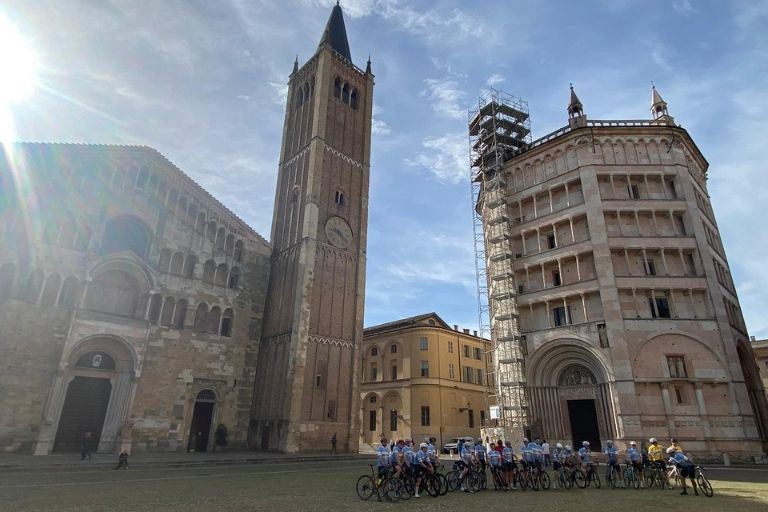
Piazza Duomo di Parma
Officially known as the Cathedral Square of Santa Maria Assunta, it is the most important Catholic place of worship in Parma and its province and a major destination for pilgrimages and religious tourism routes. Built in the 11th century in Romanesque style, the cathedral houses ten chapels along the side aisles. The internal octagonal dome was frescoed in the 16th century by Antonio Allegri, known as Correggio, with the famous painting of the Assumption of the Virgin. The architectural complex also includes the bell tower and the adjacent baptistery.
Caseificio della Bassa Parmense
One of the places where Parmigiano Reggiano cheese is produced according to its authentic and original method: a 100% natural product, lactose‑free and without added additives. In this area, between the localities of Frassinara and Ramoscello (hamlets of the municipality of Sorbolo Mezzani), historical documents and artifacts have been found that testify to the centuries‑long production of Parmigiano Reggiano. Guided tours are available inside the dairy, where visitors can observe every stage of the cheese‑making process.
Percorso ciclabile del pomodoro
A cycling route that runs through one of the most important tomato‑producing areas in Italy and the world, thanks in part to the decades‑long work of leading companies such as Rodolfi and Mutti. The route allows visitors to cross the territory within an unspoiled natural setting, passing large agricultural fields and evocative wooded inlets.
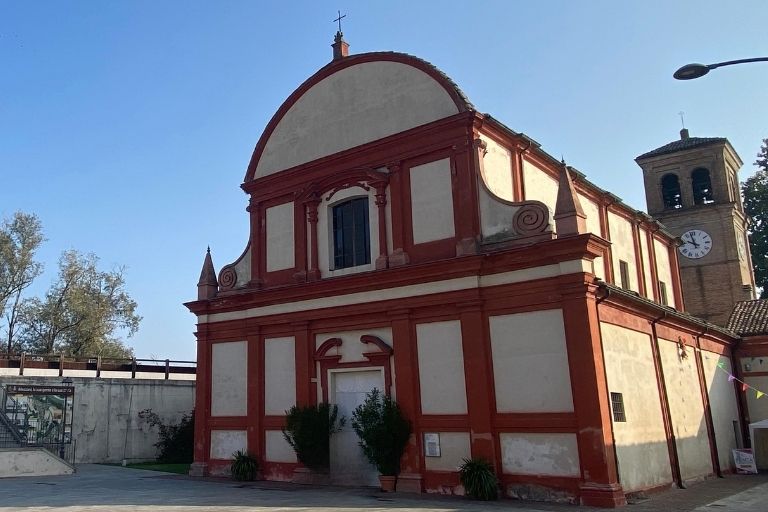
Chiesa barocca di San Michele
Originally built in the 12th century in the locality of Mezzani and later rebuilt in the Baroque period due to damage caused by repeated flooding of the Po River. Today it is considered one of the most appreciated places of worship in Italy for the distinctive decorations of its façade, characterized by six Doric pilasters and four Ionic pilasters. It is a popular destination for thousands of pilgrims who travel each year along the paths and routes that run alongside the Po River.
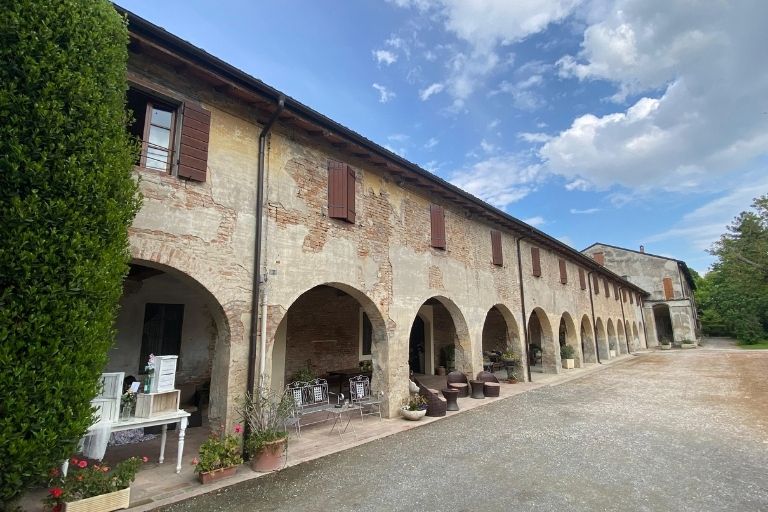
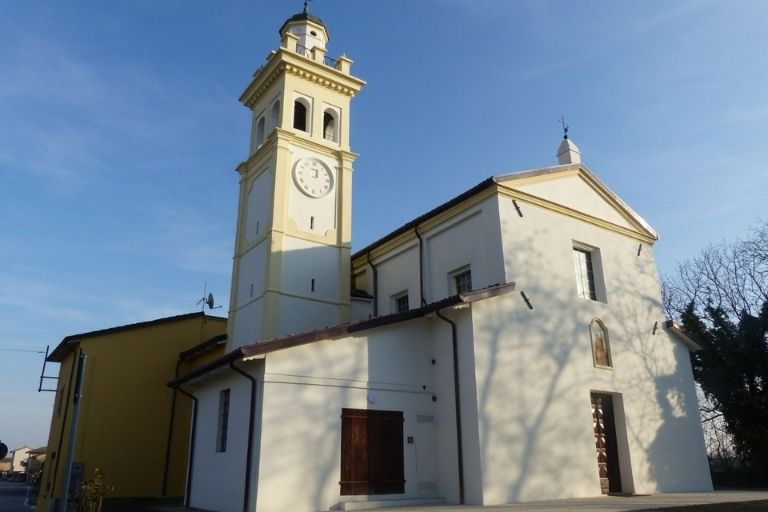
Antica Grancia Benedettina di Sanguigna
A typical Renaissance‑style building historically used by Benedictine orders as an agricultural estate until 1810, when it became private property following the suppression of religious orders decreed by Napoleon Bonaparte. Today it is a destination for tourist and educational visits, where visitors can observe spaces and tools typical of ancient monastic life.
Salice Terme
Overview
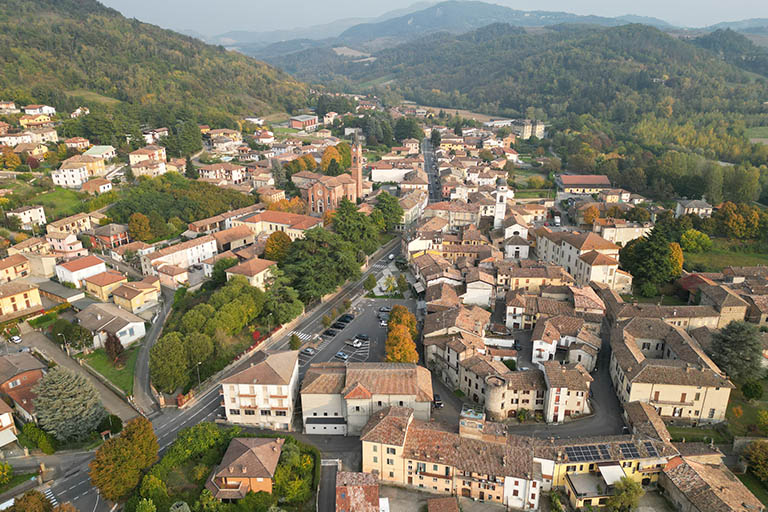
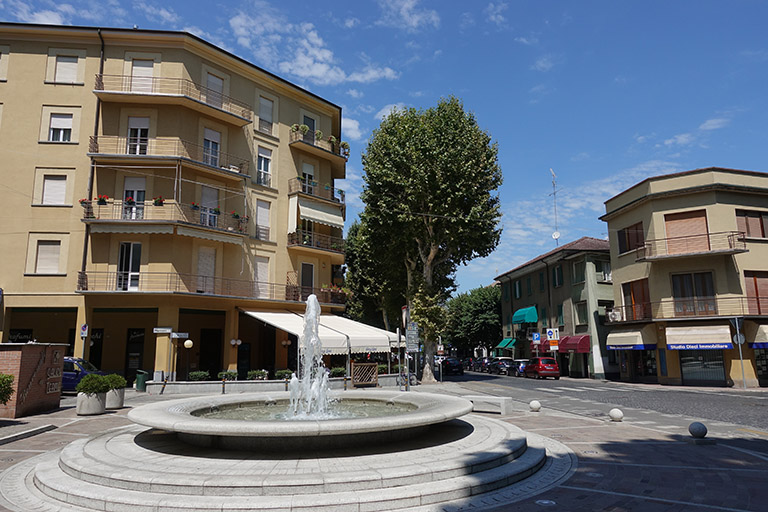
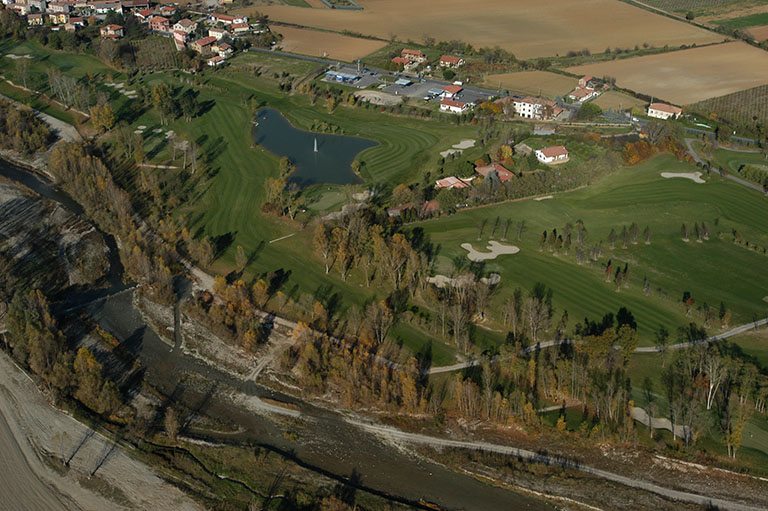
Salice Terme is a spa town located in Lombardy, in the municipality of Godiasco Salice Terme (province of Pavia), in the heart of the Oltrepò Pavese area. It lies in a hilly region at the foothills of the Apennines, surrounded by a peaceful and green natural environment.
The area has been known since ancient times for its thermal waters, particularly sodium-bromide-iodine and sulphurous waters, which are used for therapeutic treatments and wellness programs. The thermal baths are still today the main distinctive feature of the area.
Food
Varzi PDO Salami
A cured meat that is the symbol of the Oltrepò Pavese region, produced in accordance with PDO regulations. It is renowned for its coarse texture, sweet flavour and maturation in the hillside environment.
Oltrepò Honey
An artisanal product linked to the biodiversity of the hills, often made from acacia, chestnut or wildflower honey.
Local cheeses
Typical products of the hilly region, often served with cured meats.
Staffora Valley Cherries
Traditionally grown in the hilly area, prized for their sweetness and quality.
Staffora Valley Apples
Thanks to the mild yet breezy climate and the favourable exposure of the land, the apples develop an ideal balance between sweetness and acidity, resulting in a particularly fragrant and flavourful fruit.
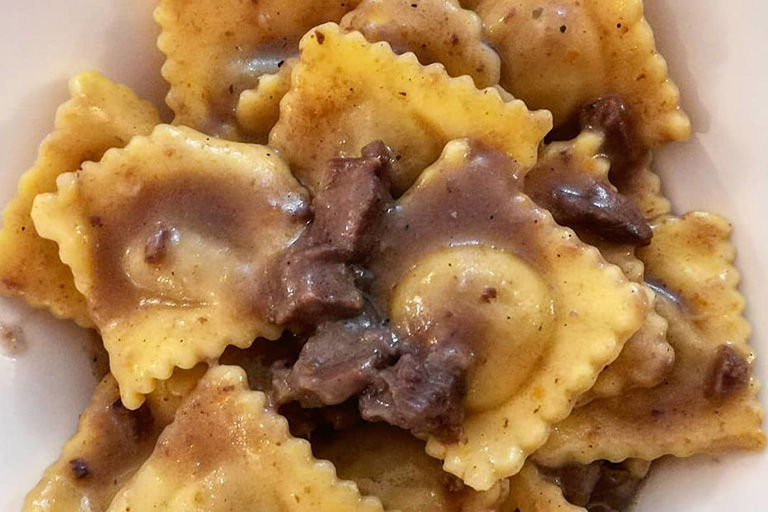
Agnolotti dell’Oltrepò
A type of stuffed pasta typical of the Pavia area, filled with braised meat.
Almond cake from the Oltrepò
A simple, rustic traditional dessert.
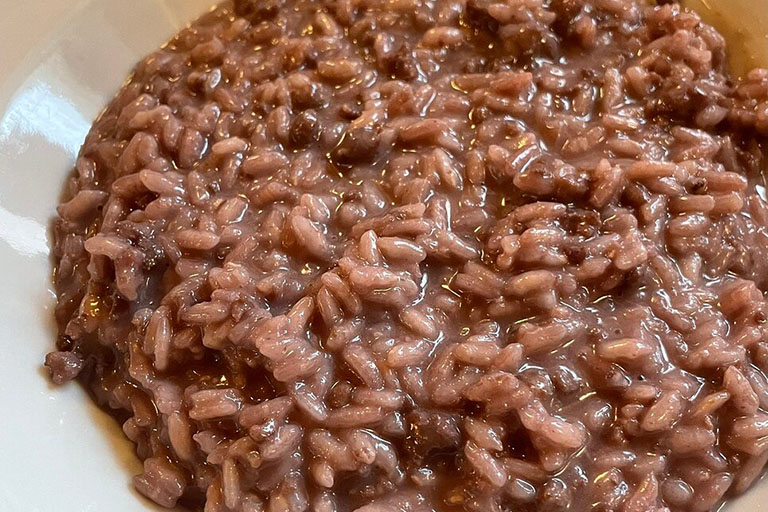
Risotto with Bonarda
Risotto creamed with Bonarda wine from the Oltrepò Pavese, which gives it a purplish colour and an intense flavour.
Wines and drinks
Pinot Noir from Oltrepò Pavese
The region’s signature grape variety, produced both as an elegant, full-bodied still red wine and as a base for high-quality sparkling wines. It is the pride of the Oltrepò region.
Metodo Classico made from Pinot Noir
A sparkling wine produced using bottle fermentation. It represents one of the region’s finest wines thanks to the quality of the local Pinot Noir.
Cruasé DOCG (Metodo Classico Rosé)
A rosé version of the Metodo Classico, made from Pinot Noir. It has a pale pink colour, fine bubbles and delicate aromas of red fruits.
Bonarda dell’Oltrepò Pavese
A lively or still red wine, fruity and smooth, widely enjoyed in the local tradition.
Barbera dell’Oltrepò Pavese
A fresh and slightly tart red wine, with notes of cherry and red fruits, typical of the rural culture of the Oltrepò Pavese region.
Points of interest
Salice Thermal Baths
A historic spa complex known as far back as Roman times for its sodium-bromine-iodine waters. It lies at the very heart of Salice Terme’s identity, linked to wellness tourism and Art Nouveau tradition.
Salice Thermal Baths Park
A large historic park covering around 10 hectares, featuring monumental trees, tree-lined avenues and an Art Nouveau atmosphere. It is the main gathering place and green symbol of the town.
Historic Centre of Godiasco
A village with remains of medieval walls and streets that retain the names of the ancient guilds. In Via del Castello, the remains of a stone tower and river pebbles are visible, which probably formed part of the feudal estate’s defensive walls. Another tower overlooks Via della Cerchia.
Palazzo Malaspina
A palace built on the ruins of a pre-existing fortress, it features a sandstone portal supported by two caryatids. Inside is a porticoed courtyard with a stone well topped by 16th-century statuary decoration.
Parish Church of San Siro
A church built with exposed brickwork in the style of the early 20th century. The structure is late Gothic, with tall Latin cross columns supporting cross vaults. Of particular interest are the stained-glass windows depicting saints, the victorious Christ and the Virgin Mary.
Voghera-Varzi Greenway
A cycle and footpath along the former Voghera–Varzi railway line, ideal for cycle tourism and walks surrounded by nature.
Via del Sale
An ancient trade route linking the Po Valley to the Ligurian Sea, now a historic walking trail.
Salice Terme Golf Course
A renowned golf course set amidst lush greenery, a must-visit for enthusiasts.
Rocca di Montalfeo
An ancient strategic fortification along the Via del Sale, bearing witness to the area’s medieval commercial importance.
Church of San Giovanni
A church located in the hamlet of San Giovanni Piumesana, which houses a 17th-century balustrade, a 16th-century piece of furniture in the sacristy and large 19th-century paintings.
Videos Stage 07

Giro d'Italia Women 2026 | Stage 7 | Highlights 🇬🇧
5 Jun 2026
Giro d'Italia Women 2026 | Stage 7 | Last KM 🇬🇧
5 Jun 2026
Giro d'Italia Women 2026 | Stage 7 | Giro Express
5 Jun 2026Photos Stage 07

Giro d’Italia Women 2026 | Stage 7 | Best of
05/06/2026
Giro d’Italia Women 2025 | Stage 7 | Best of
12/07/2025